
The Chatham Arts Council is investing in artists through our Meet This Artist series, introducing you to Chatham County artists each year in a big way. In celebration of our Chatham Artists-in-Schools Initiative season’s imminent kick-off, we’re circling back to a beloved Artists-in-Schools artist we last featured here in 2015. So, take a look. Meet your very inspiring neighbor.
Guest writer Corbie Hill penned this Meet This Artist feature. Corbie is a writer, musician, runner, and Star Trek superfan who lives in Pittsboro. Listen to Corbie’s music here, and find him on Instagram here.
Our Meet This Artist feature is made possible with support from the team at VRC, Ltd.

The moment I step into Diali Cissokho’s house he starts into a story.
He doesn’t feel right unless he’s around children. They have a glow that sustains him. He says it’s like seeing God beside them. His fellow adults don’t have this. Because of who Cissokho is and how he was raised to engage the world, the story flows from there, its tendrils snaking away like tributaries.
A frequent (and popular) participant in the Chatham Arts Council’s Artists-in-Schools Initiative, Cissokho tells about a child in a Siler City school who had lost his dad the night before one of Cissokho’s music-driven programs. The boy wasn’t touching the drums, Cissokho says. He just sat there, stunned.
“I come to him, I say, ‘Can we talk?’” Cissokho tells me. “’I understand. I’m sorry. What happened to you, me too. I lost my parent when I was little.’” And then Cissokho suggests the child play a drum. It will help. Soon the kid is dancing. And soon Cissokho’s story wanders into related territory, into his own upbringing and education and attitudes toward parenting. The story never quite ends. It keeps moving.
Cissokho comes from a long line of Senegalese griot (which is the singular and plural form of the word), raised as a musician, storyteller and community advisor. His memory holds entire histories. In his hometown, the coastal city of Mbour, Cissokho’s family is deeply respected.
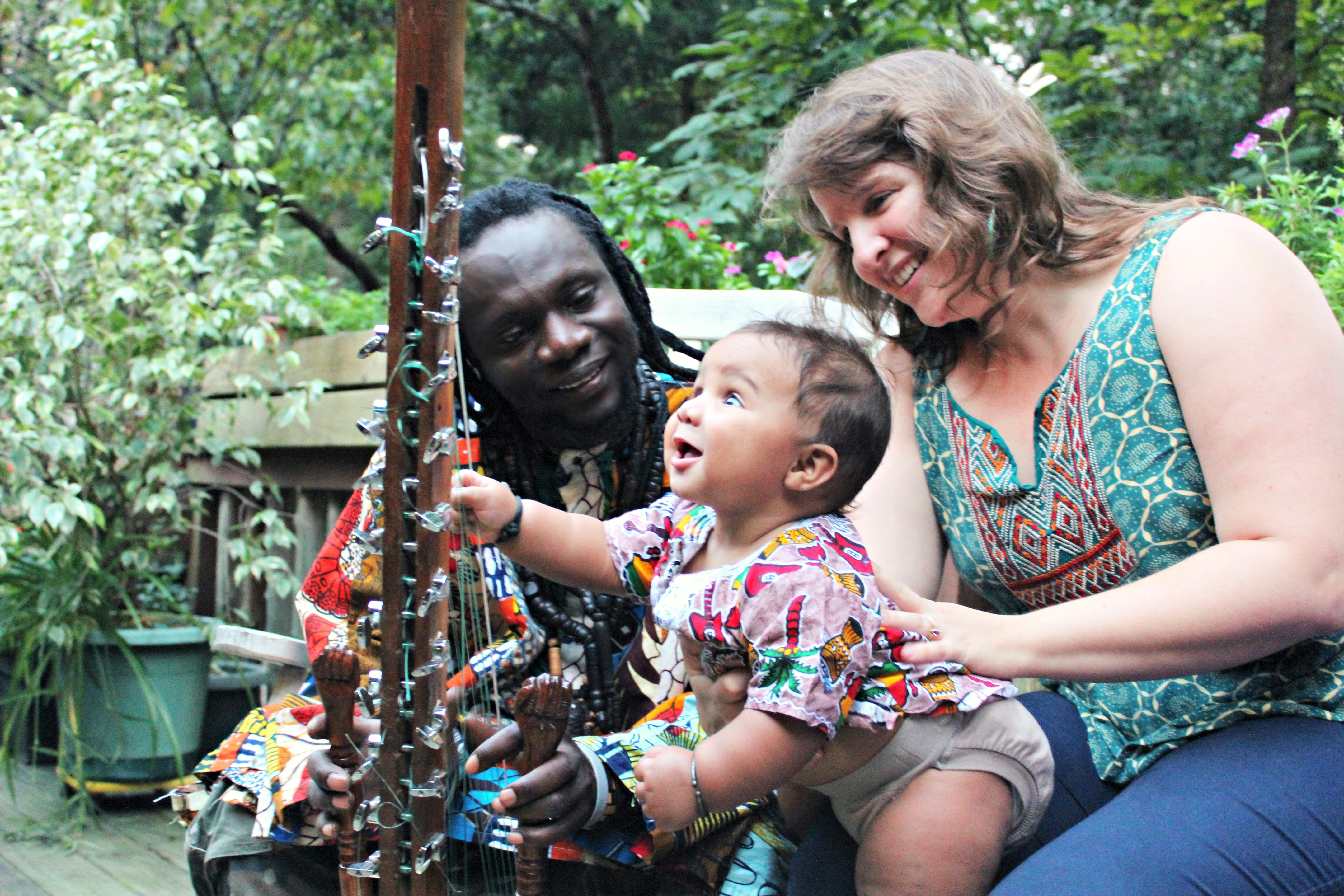
Nowadays he lives just outside of Pittsboro with his American wife and their two children, but Cissokho holds his culture tight. He wears it proudly through his Artists-in-Schools work, when he plays with his band Kaira Ba, and at home, where he is most attuned to his instrument, the kora. It’s more than just a source of music, he explains, but a conduit to his ancestors.
This interview has been edited for length and clarity.

What was it like growing up among griot?
Back home, when kids are born, they don’t give you a name right away. You wait. I was born in a griot family. My mom, she’s griot. My papa, all my family.
I remember my papa told me when I was born, the week later, so many different griot come to my ceremony—playing, singing, telling stories.
Being born into a griot family, it’s like if your mom is a principal at school and your dad is a principal at a school. Of course you’re gonna be smart, you’re gonna know a lot, because they want to pass that on to you.
People from outside of griot families, what do they come to a griot for?
When people come to the griot, they come in for blessing. Second, they need advice. Third, they come [asking a griot to] bless my house or my kid or my business I’m opening.
Even the president of Senegal. My dad used to be like his advisor. The president is not allowed to do anything without talking to my dad.
Griot are not allowed to hurt anybody. No matter what, they can’t hurt [anyone]. You can hurt a griot. A griot can forgive you, but a griot can’t hurt you back.
Are your children getting any sort of griot upbringing?
Yes, and my wife supports me about that a lot, even with our different cultures.
I don’t read. When I’m sitting with my kids, I tell them where they’re from, what kind of blood they have, who they are, who their ancestors are. I tell them that a lot, and they understand very well. When we go back home with them, you should see that people treat them really well, really respectfully.
As a griot, what are some of the stories you know? How far back do you know your ancestry?
Seventeen generation. I know all of them.
Seventeen?!
Yes. Seventeen. I know everything, all my ancestors, where they’re from, who their parents were. I know everything. I don’t write it down. I will tell you [about them] no problem, because griot don’t write it down. When a griot passes away, it’s like if a library catches fire. That’s why we’re not allowed to die with that. When we have kids, we start telling the kids [everything] so they can keep it.
My kid Lucy, who met you last year through Artists-in-Schools at George Moses Horton Middle, told me to ask about your favorite instrument. That’s the kora, obviously.
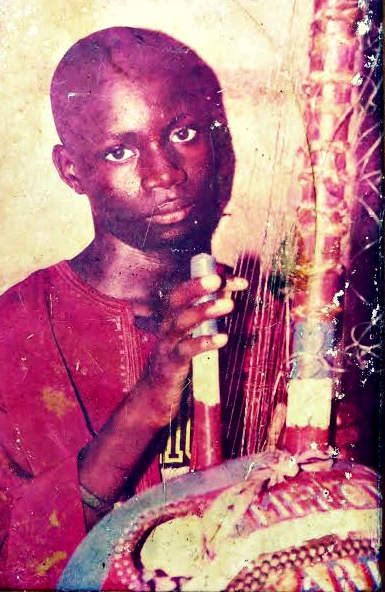
That’s true. I was born with kora. I used to play it at five years old. After, when I turned 10, I don’t like to play. I hate it so much. If my parents let me choose what I want, I would be a soccer player today and you would not be interviewing me.
I was having a hard time with my papa a lot, a lot. My mom was not supporting me in my decision also, because my mom wanted me to play kora. I was so close to my mom. She was my best friend.
My papa had a big house and four wives and 32 kids. We all lived in the same house. Nobody moves out. Everybody stays together, eats together. All my brothers and my uncles, cousins, everybody playing kora. I am not into it.
[Papa] said, “In this house, look around you. Tell me who is playing soccer here. Nobody. This is a music house. Soccer is not allowed here. Kora is allowed here. Drumming is allowed here, or every instrument is allowed here, but no soccer playing.”
One day I was so tired. I say, “Okay, Papa, I’m ready. Can you teach me how to play kora?” [He said], “No, I’m not teaching you.” I said, “Papa, come on. You’re the one who say I have to play.” He said, “I don’t have the time to sit down and teach you. Figure that out yourself.”
I’m sitting in my room. I’m crying by myself, and then I’m tired of crying. I opened my door. I went to Mom. I wake her up. I said, “Mom, can you go to my dad’s room, get his kora to bring it to me?” She gave it to me. I took the kora. I went to my room. I locked myself in. I turned the light off.
Everything came to me like magic.
My papa woke up in the middle of the night. He asked my mom, “Who’s playing kora in the middle the night like that? Who? He plays so good. Who’s that?”
Mom said, “Go to the window.” He came to my window. He looked in at me.
After, he came to my door, knocked on the door. I opened the door. He was crying. I said, “Papa, what’s going on? Why are you crying?” He said, “This is what I’ve been telling you. I know it’s inside you. You have it.
“With you, kora comes to you. With me, kora didn’t come to me like that. I’m not lucky. When I was your age, I had to study kora from my dad. Even if I teach you, you’re gonna be better than me, no matter what, because you already have it. That’s why I’m jealous. That’s why I told you I’m not gonna teach you.”
And you play the kora standing, which I understand is pretty rare.
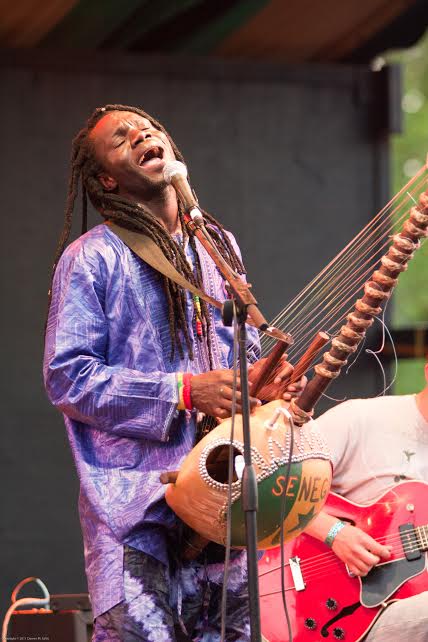
Playing kora standing is magic. Other kora players, they can’t even sing. That depends on the person you are and how kora responds to you.
I’ve seen you refer to the kora as your first wife. It sounds like it really is a relationship with the instrument.
I’m not joking about that. My wife understands that. The first time when I met my wife, sheknows that [the kora and I] are in a relationship. My kora, that’s why my wife knows me, so I’m not gonna put my wife number one and my kora second. The relationship I have with kora, I don’t have that with my wife, to be honest. Yeah, I understand she’s human, but my kora is different, the relationship we have.
How about your kora playing with your band Kaira Ba? How is that different?
Also I have my solo stuff. Let me give you a short example about one my band members. His name is Will [Ridenour]. He always say that to people. If you really want to know who Diali is, go hang out with Diali. Play kora with Diali. He’s a different Diali. His kora’s different when he is on the stage and when he plays by himself.
I perform at my house. People think I perform when I’m on stage. I’m not. When I’m here [at home], that’s when I’m performing.
Will plays kora also. The first time me and him and Atiba [Rorie], one of my friends, [came over], I said “Bring your kora. We all can sit, hang out at my house. I can make a dinner. We can play kora. Each one grabbed a kora. When I played, they stopped. “Diali. I really don’t understand who you are.” “Why?” I said. “Because you’re different. You’re totally different.”
I said “It’s not me. It’s the kora who does that to me.” A lot of people, everyone who knows Diali, they think Diali plays. I’m not. It’s not me. I’m not playing. But for you to understand that, you have to sit so you can see Diali playing.
Is that ancestral?
Yes. Yes! That’s the secret. I don’t play kora. It’s not me. You’re gonna see my fingers move. It’s not me.
With Kaira Ba it’s a big difference. I’m in school. This is what my teacher writes down to do. That’s how I feel.
Because there’s a format you have to follow?
Yes. And then also being with the audience and the time they give us to stop.
Being in schools is me, and I’ve got freedom, but not the freedom to do whatever I want.
When I’m by myself, any kind of ceremony I’m playing by myself, that’s a big difference. That’s my secret.
I don’t think I could even understand what that feels like, even if you told me.
I believe you. It’s gonna be hard to understand.

I looked back, and 10 years ago the Chatham Arts Council asked what your life would be like in 10 years.You said you would have peace in your life, good health, and happiness in your family. Here we are. It’s 10 years later. Did it come true?
(Tears up) I’m sorry. I’m being honest. What I say is true. I’m happy. Truly. Big happy. When I’m around my kids, it makes me so happy—really, really happy. And I see them every day. It makes me so happy.
Healthy, yes, because every day I exercise. Every day! Me and my wife, we’re happy together. We’re happy and we’re doing our best.

Leave a Reply