The Chatham Arts Council is investing in artists through our Meet This Artist series, introducing you to Chatham County artists each year in a big way. So, take a look. Meet your very inspiring neighbor.
Guest writer Corbie Hill penned this Meet This Artist feature. Corbie is a writer, musician, runner, and Star Trek superfan who lives in Pittsboro. Listen to Corbie’s music here, and find him on Instagram here.
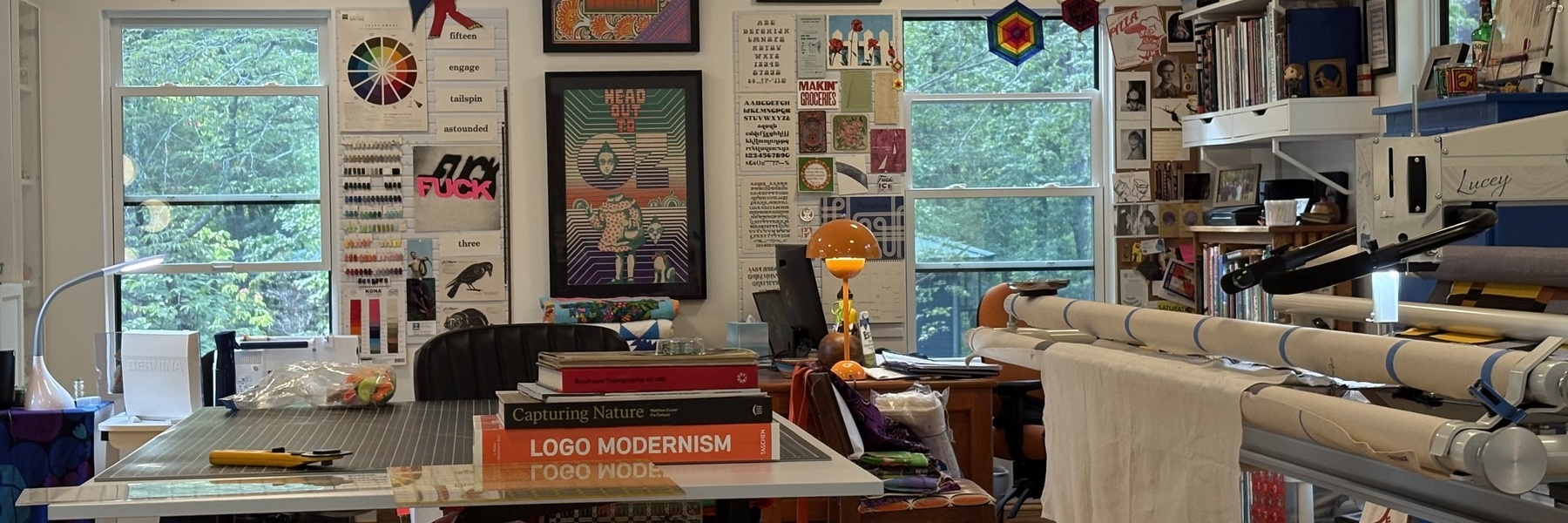
A few miles north of Pittsboro in the river hills above the Haw, Kat Nicholas is at work surrounded by color and texture.
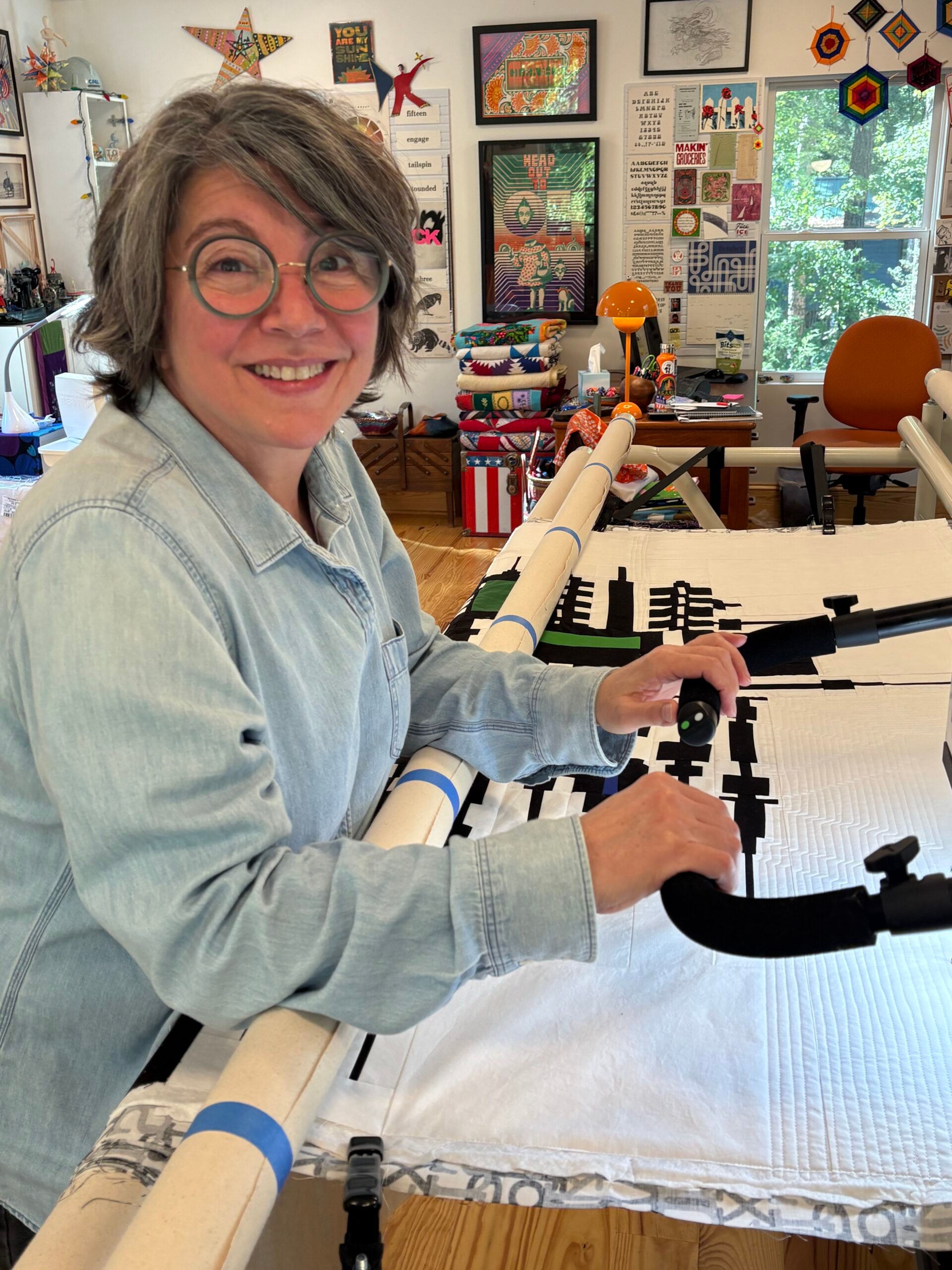
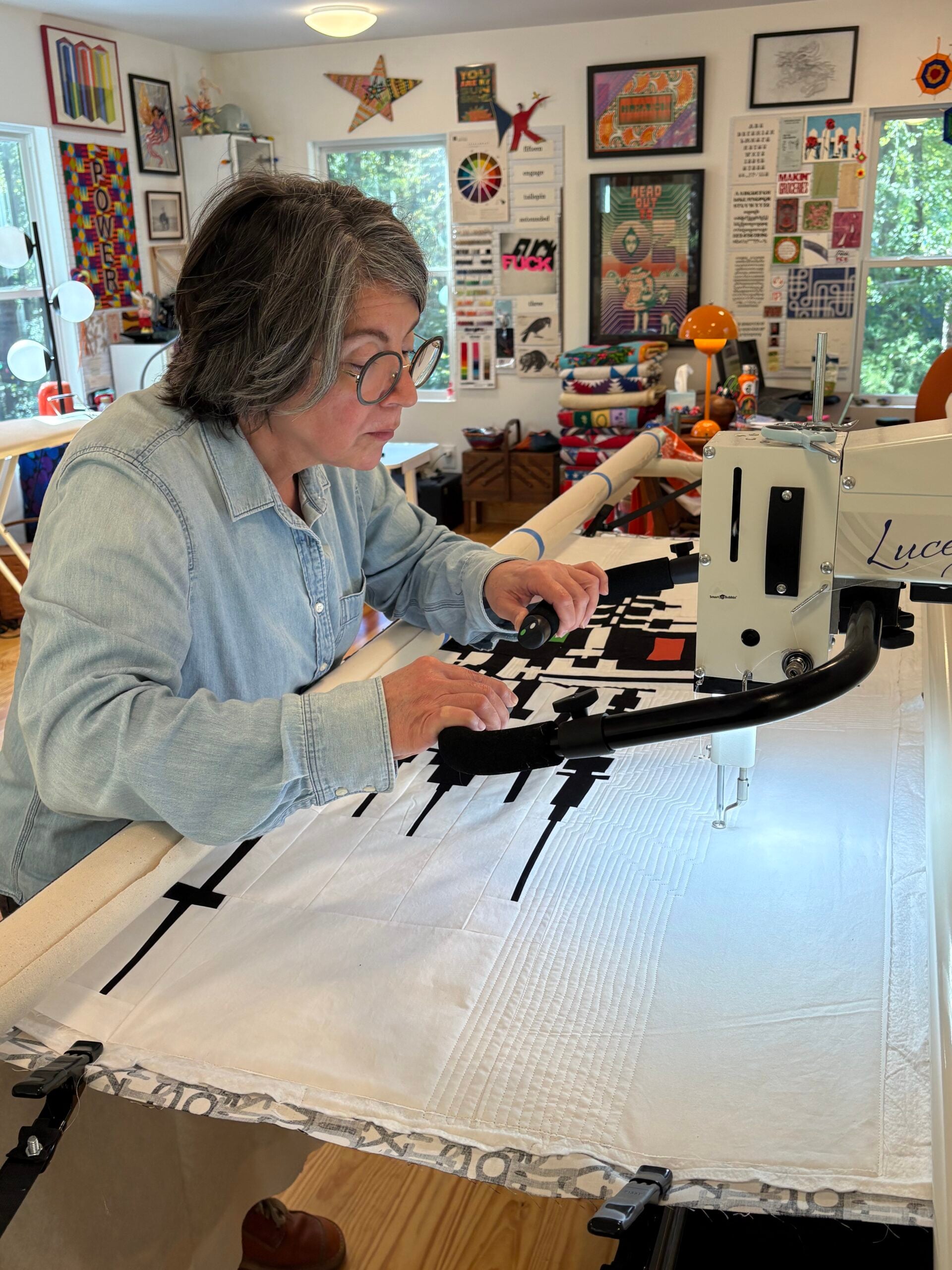
Here in the finished top story of her new studio, The Hem and Haw, she has a sewing table with a traditional sewing machine in one corner. God’s eyes and quilts and graphic prints hang everywhere. Her dog naps below a sunny window. A longarm quilting machine takes up one side of the room. Not too long ago, this artist quilted at the supper table in the little house she and her husband raised two sons in. Nowadays she can go big.
“I recently got the longarm because I wanted to be able to quilt larger quilts,” Nicholas says. “I also want to spend some time learning how different patterns of stitching can alter and enhance the design of the quilt. Up until now, I’ve been focusing on creating designs and patterns with fabric. You could also focus on patterns with the actual quilting. Recently, I’ve been playing around a lot with stitching words into quilts.”
Downstairs is a ground floor rich with potential. So far, it’s empty, but soon it will be a space Nicholas will share with other quilters and artists. Though Nicholas’ tendency has always been to do her own thing, she’s come to appreciate the irreplaceable energy of artists working in proximity. Soon, she will convene that in her own studio.
We caught up with Nicholas at her Chatham studio to talk about her road to quilting, her nontraditional approach and the ways working among other artists have surprised this otherwise solo act.
This conversation has been edited for length and clarity.
Corbie Hill: What is your art form?
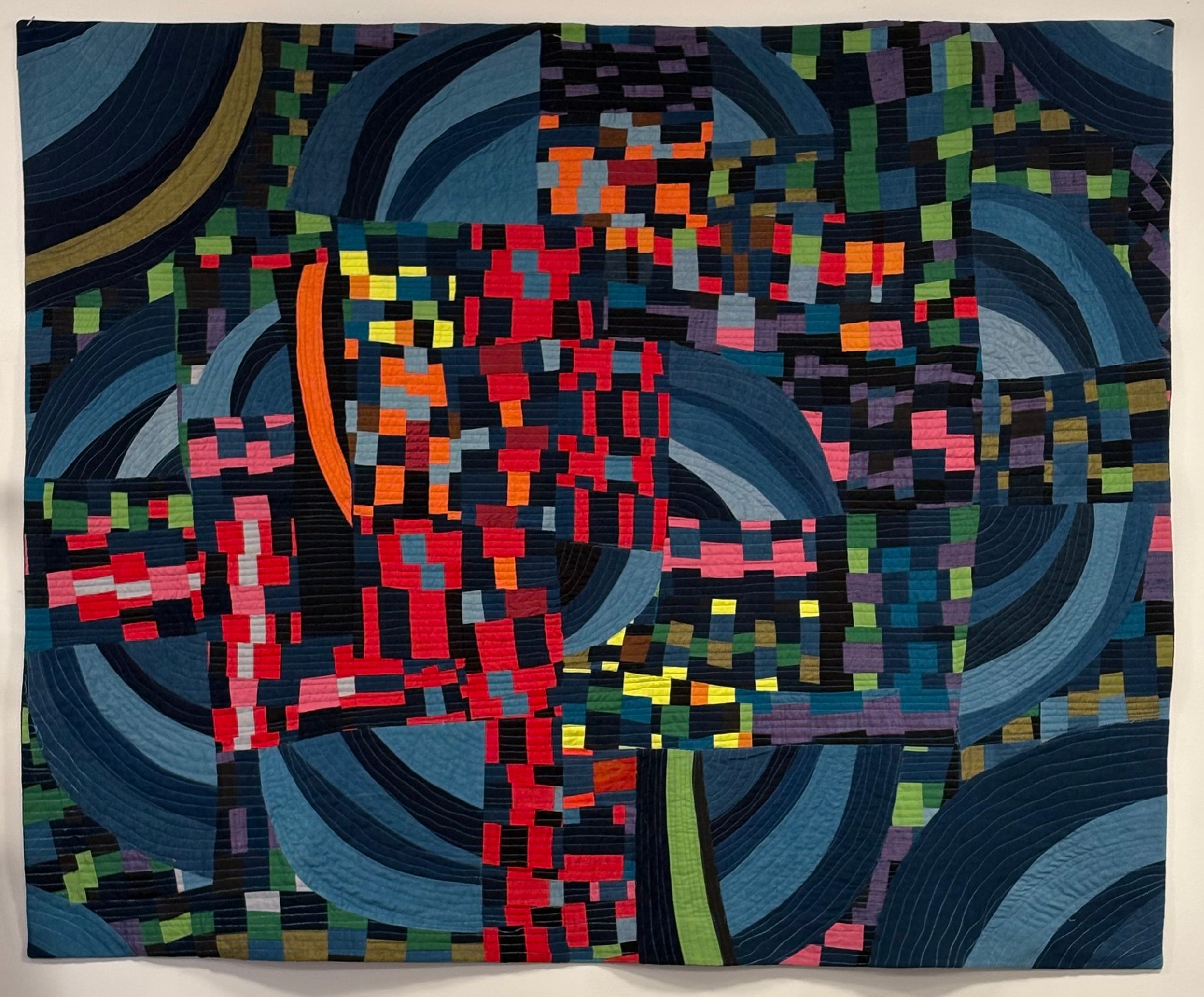
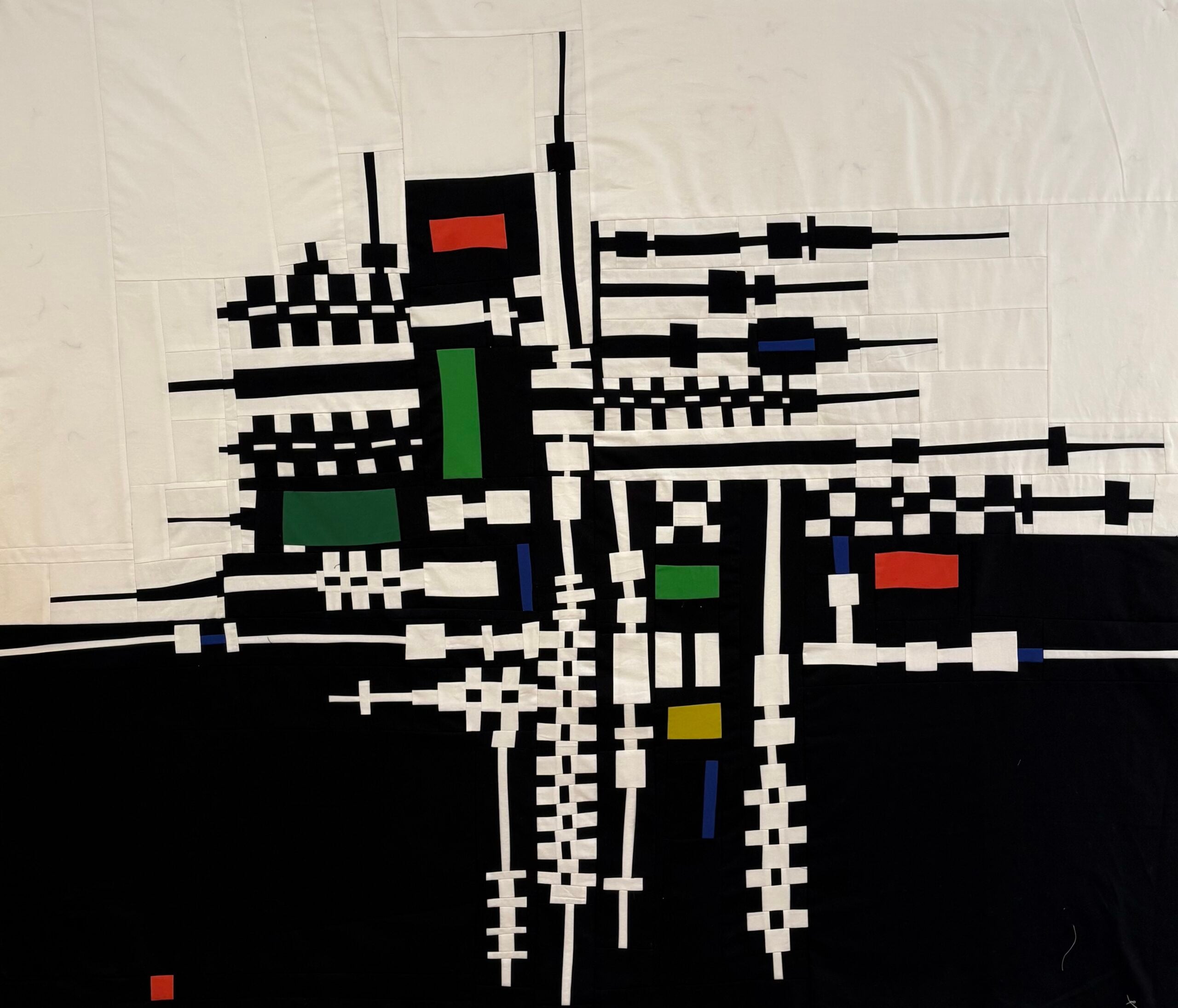
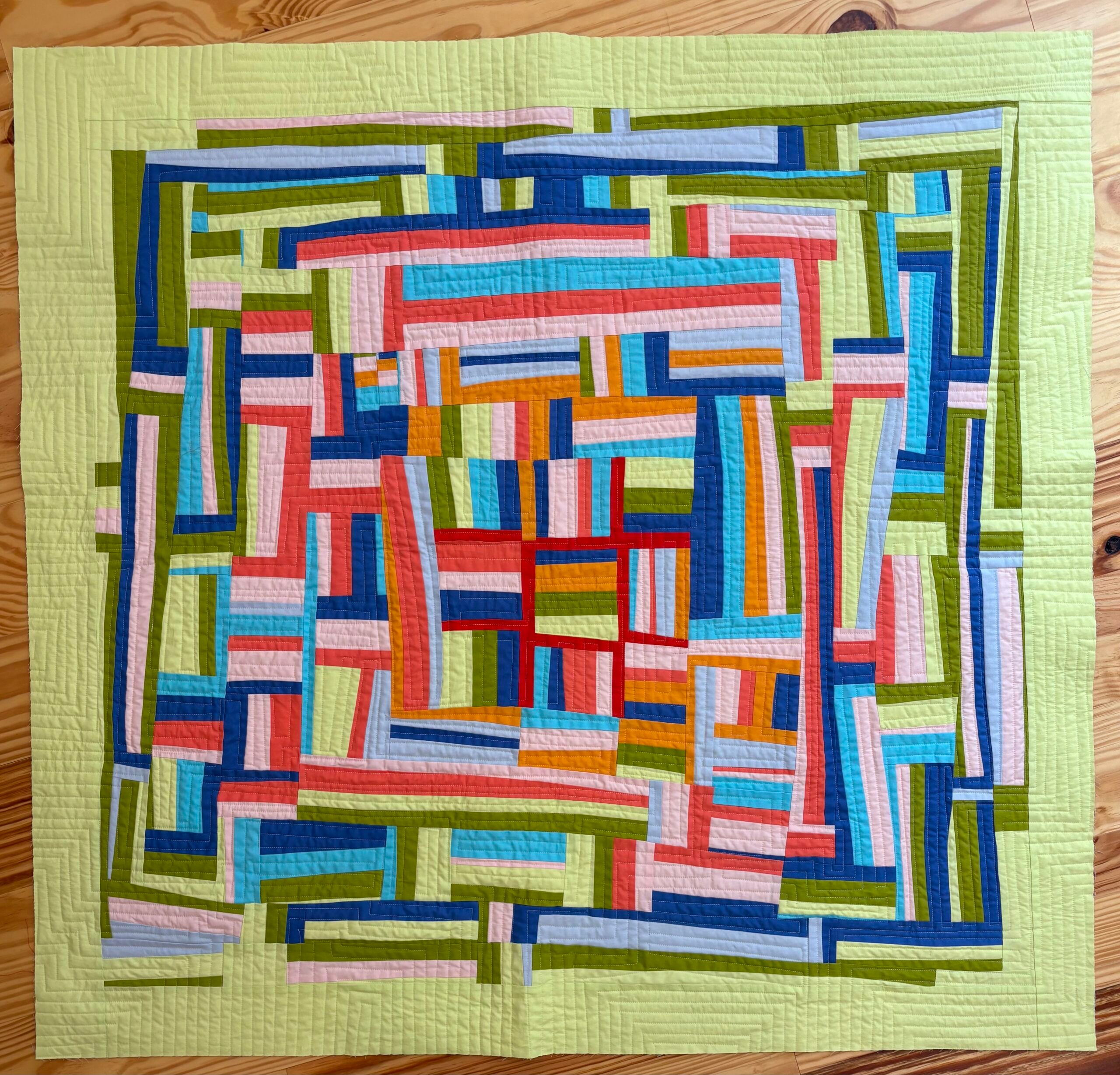
Kat Nicholas: At its core, it’s quilting. In my experience, when you tell people you’re a quilter, more often than not, their mind goes to grandmothers in rocking chairs and hand quilting, which I have great respect for. I’m always in awe of anybody who does hand quilting, but I’ve never had the patience. I design on the wall now, though when I was still in my house, I often used the floor or the bed to layout designs. Then I construct and quilt on a machine. My focus is more modern than traditional, although the influence of some traditional quilt block patterns can be found in some of my work.
CH: How did you find your corner in the quilting world?
KN: I’ve always been drawing or painting or something-making ever since I was a little kid. Both my parents had what I think of as a pretty good aesthetic sense. In the early 70s, my mother had these Marimekko wall hangings that she would switch out each season. [There was] also this Peter Max “Love” ashtray that used to sit on our mod white coffee table. I was also a kid when Yellow Submarine was still coming on TV every year. Those things defined my aesthetic so much more than I could ever have imagined. Solid, saturated color and clean lines have really become part of my creative output.
I have three sisters and my parents were always very supportive of any and all of our artistic or creative endeavors. I grew up drawing and making collages and I’ve always been fascinated with typefaces and hand lettering. I tried painting for many years and fancied myself a writer for a while. In my twenties, I spent many years working in a used bookstore during the day and tending bar at night, and in between, spending whatever time was left in a Raleigh coffee shop writing poetry and prose. Some of it was ok, but most of it just reflected a lot of existential angst and was pretty bad.
My desire to learn how to quilt grew from simply opening my mother’s red cedar chest one time when I was probably 11 or 12. There was a whole cloth quilt made from feedsacks, all pink on one side and gray on the other. They weren’t at all my colors but the softness of the quilt and knowing that it had been made by a great aunt just drew me in. I used and carried that quilt with me for many, many years and the more I got to know the quilt, the more I realized I wanted to learn how to make one myself. Initially I thought I wanted to learn how to hand quilt, but I quickly realized that machine quilting was more my speed. I had toyed around and tried to teach myself how to make a quilt, but I didn’t get very far. Many years later, when I was pregnant with my first son, I brought the idea of making a quilt up to my husband, so he bought me a sewing machine. I took an intro to quilting class at a fabric store called Thimble Pleasures in Carrboro, and that was that. I was totally hooked.
When I started quilting, I was learning patterns and taking classes, like many beginners. But after a few years, I became a bit bored with the patterns I was seeing and wanted to begin exploring different techniques. I wanted to see how bending the rules and pushing the boundaries of traditional quiltmaking could open up new possibilities. So I stopped using patterns and my ruler and began to design more intuitively and improvising my quilts.
Around the same time, In the early 2000s, a lot of quilters had blogs and I realized there were others out there who seemed to have the same desire to explore quilting in new ways. One of those quilters whose blog I was following was Alissa Haight, co-founder of The Modern Quilt Guild out in Los Angeles. Sometime around 2012 or so she put a call out to others who may want to start a local chapter. I reached out to her to tell her I was interested and, with the help of my friend Kim, began the Triangle Modern Quilt Guild (TMQG). I was President of TMQG in the beginning, but then I stepped back. I still had two small children at home and I worked full time and realized I just didn’t have the bandwidth to do everything while also still trying to have time for making quilts.
CH: How does your art exist in the world?
KN: I’m still trying to figure out how it exists within myself. It’s only been within the last year or so that I would even dare to call myself an artist. It’s taken me a long time to acknowledge that I may actually have talent. Having a dedicated space for quilting now has really opened up so much opportunity for me to create and linger over ideas much longer than I’ve ever been able to in the past. It really has been a game changer.
At this point in my life, I want to focus on making art that speaks to me and reflects who I am. How my art plays out into the world has yet to be seen. I’ll be on the Chatham [Artists Guild] Studio Tour this year for the first time, so it will be interesting to see if my quilts speak to others as well.
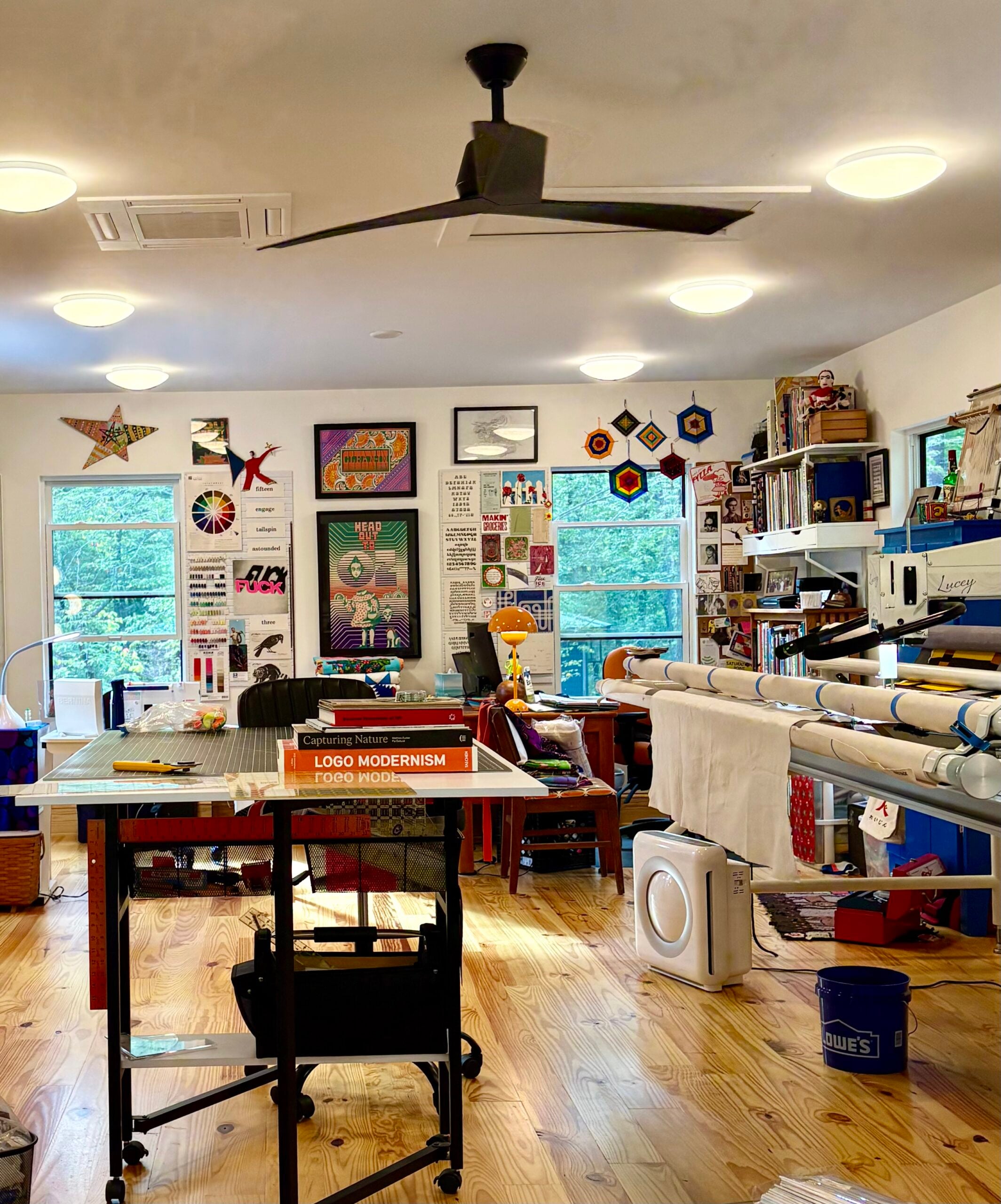
CH: Let’s talk about your studio space. You told me the idea is for people to come here and quilt together, or on their own, and perhaps to stay?
KN: In 2015, I think it was, I got a scholarship to do a weaving class [at Penland School of Craft]. I’ve always been fascinated with weaving. I was going to weave my own fabric and then I was going to make quilts out of it, which I have since learned is a crazy idea.
Anyway, I took this two-week class, and it was just so phenomenal and inspiring to be in a group setting with everyone focused on their own work but sharing creative energy. I’d really love to bring that sort of energy to The Hem and Haw.
We forget how much creativity we have as individuals all the time, but when people come together with a commonality, the energy and power created just by being together can spark new ideas and inspiration. If I can be a part of that or even just help create that energy by providing a space for others, that would be incredible. I look forward to the possibilities.
CH: What’s exciting to you today?
KN: There are so many incredibly talented people making amazing quilts as art now. I think it’s slowly becoming appreciated as an art form. Boundaries are being pushed and I’m so excited to be a small part of that.

Leave a Reply