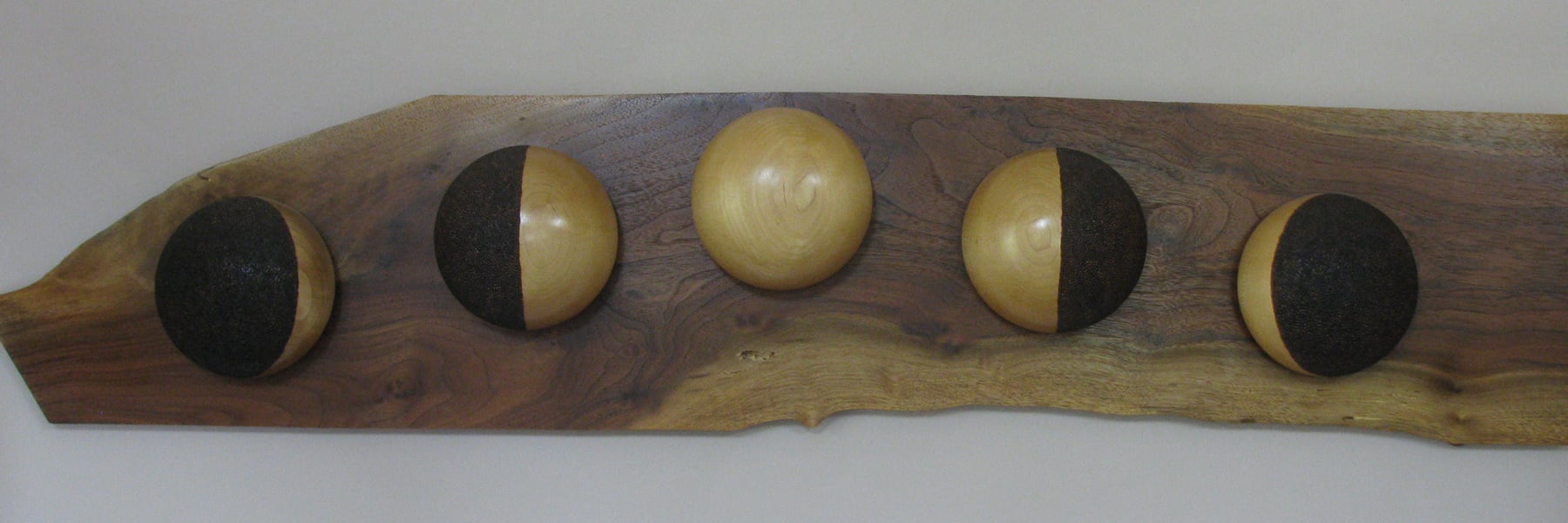
The Chatham Arts Council is investing in artists through our Meet This Artist series, introducing you to Chatham County artists each year in a big way. So, take a look. Meet your very inspiring neighbor.
Guest writer Rachel Flanagan penned this Meet This Artist feature.
Our Meet This Artist feature is made possible with support from the team at VRC, Ltd.
For Michael Thompson of Guiding Hand Woodturning, working among the trees has been a lifelong journey. From his long career in forest management to his current passion for wordturning, Michael seems to feel most at home among the wide varieties of wood he surrounds himself with. Read more to learn about this talented artist and the many ways that working with wood can bring so many surprises.
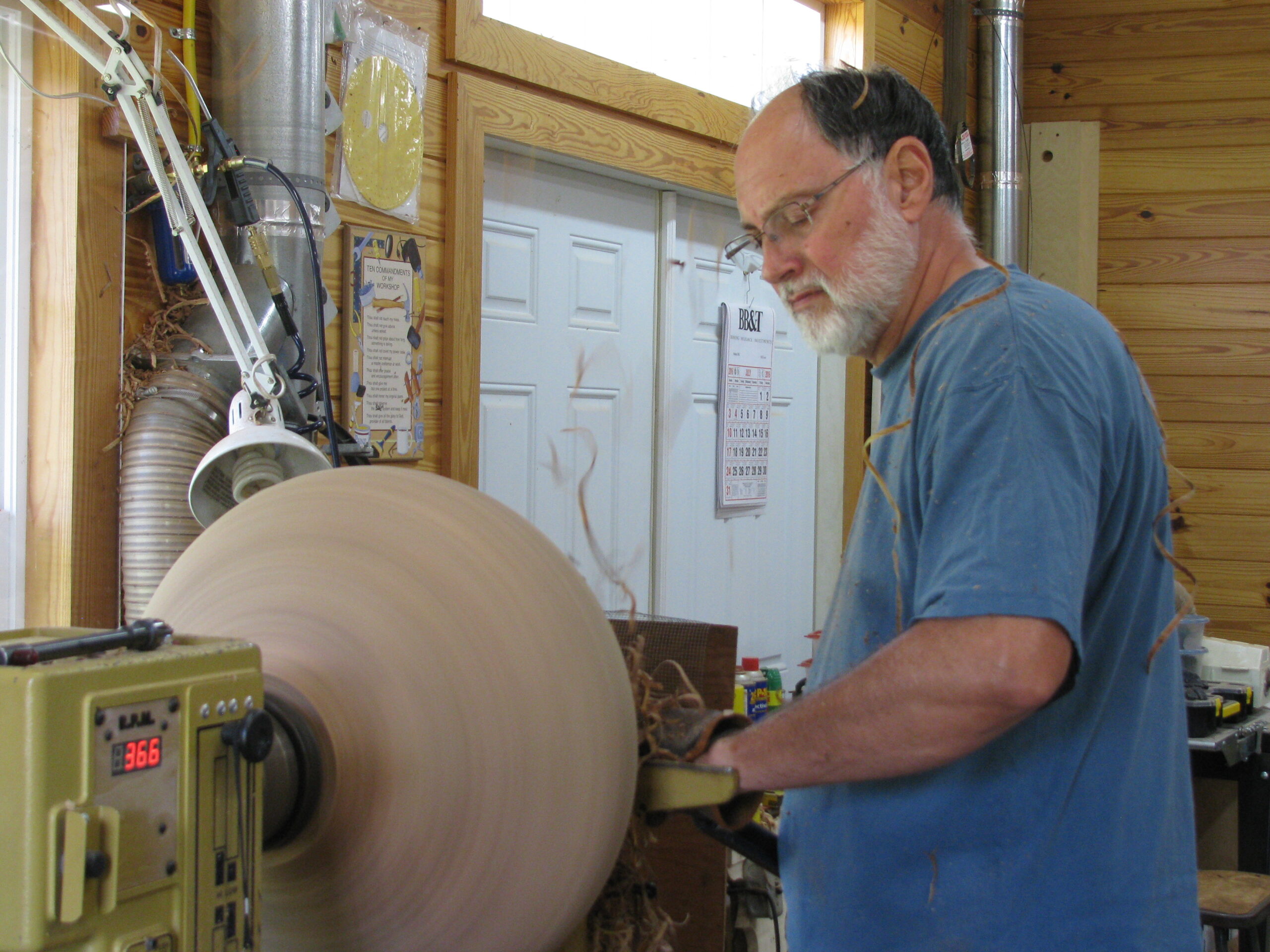
Tell me about yourself.
I grew up in the mountains of Virginia. I went to Virginia Tech, got a degree in forestry and wildlife, and after graduation was offered a job with the North Carolina Forest Service. I spent 31 years with them, focusing on forest management in North Carolina, assisting and advising forest landowners on how to manage their forests.
How did you get into woodturning?
When I retired, a friend asked if I’d ever turned wood. I said no, but that I’d always wanted to. I decided to take a woodturning class at Alamance Community College and became hooked. A lot of those early years were focused on acquiring wood and practicing on the green wood that we got out of the trees that we collected. It turned out to be quite a while before I actually turned a finished piece. The first piece I ever finished was from a silver maple tree that my wife’s father used to sit under at their place.
Turning wood has been a great journey, but it is a little strange that I spent a career advising people on how to grow trees, and now I’m working with wood from felled ones. It has been a learning experience for me as a forester about how the different woods behave when you work with them artistically, the color variations in the different wood varieties, and even the aroma of some of the wood. The most aromatic is, of course, the Eastern Red Cedar, followed by sassafras and cherry, both of which have a sweet aroma. There are some varieties of wood, to be quite honest, that don’t smell so good at all. But all wood is unique in the variation of grain and coloration.
Where does your artistic inclination come from? Were you artistic when you were young? Are there artists in your family?
I didn’t know it existed. I was just a regular kid growing up. My parents weren’t artists—my mother was a homemaker, and my dad worked at the paper mill. My original intention in retirement was to make furniture until I took the turning class, which changed my direction.
Do you have any particular favorites out of wood that you like?
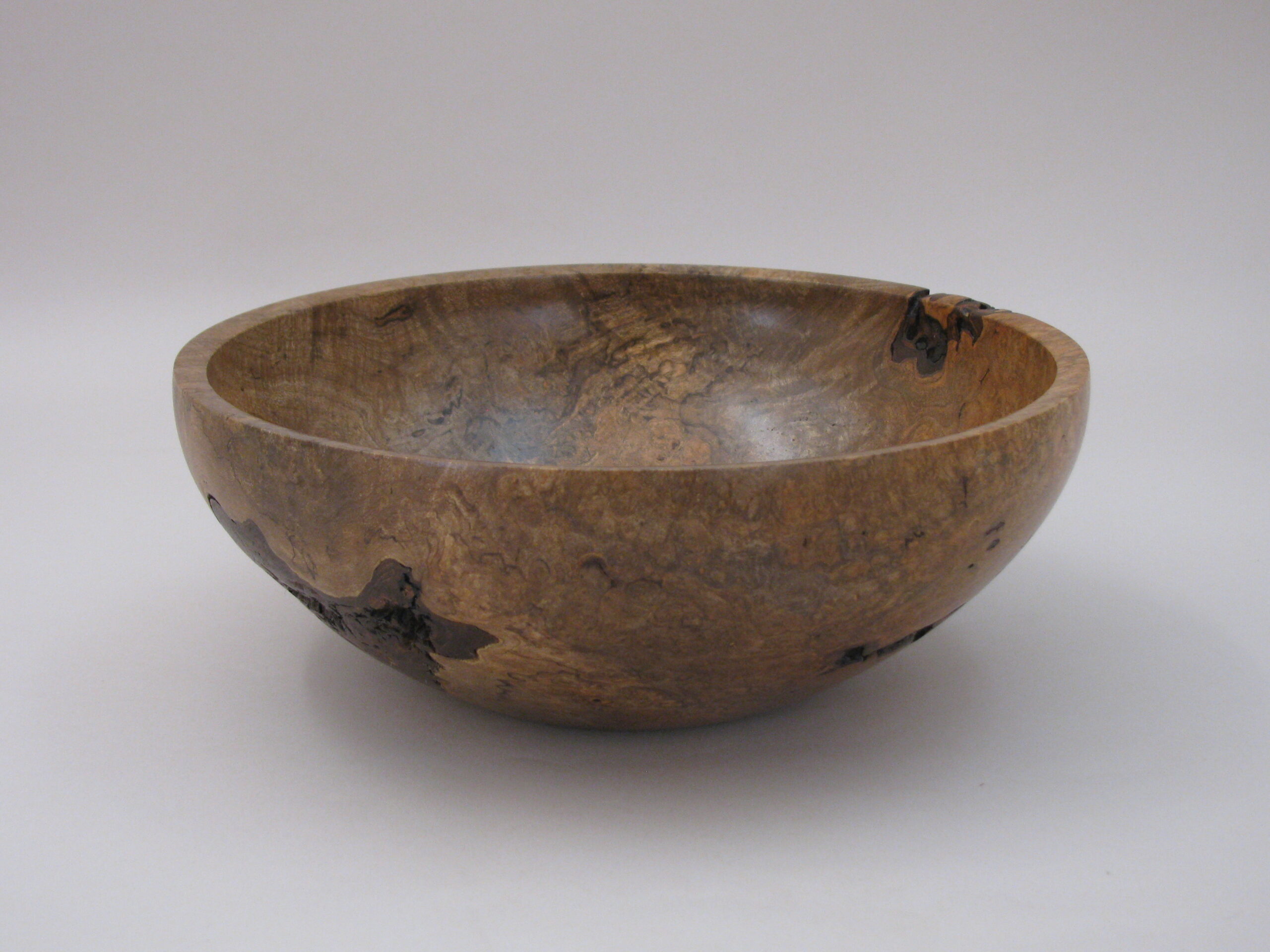
A lot of people ask me, “What’s my favorite wood?” There are two answers. One answer is that I don’t know yet—I haven’t turned them all. But probably the real answer is I like to turn woods that smell good when you turn them, like sassafras, cherry, and olive. Olive wood smells exactly like the olives that you eat when you turn it.
How do you find the wood that you end up working with? Do people know you in the area and call you when they find a great tree that they think you’d like?
That’s often how it works. Back in the beginning, when I didn’t have any wood, I joined a group of turners. When one of us in the group would find a tree, we would all descend upon it, cut it up, and divide it up for each of us to turn.
Have you ever been surprised by a tree that you’ve cut into, and there’s something inside that you didn’t expect?
Yes, a lot. When you begin working with a log of wood to prepare for turning, you never know what kind of beautiful grain is in there. Sometimes you find real curly grain that is not visible from the outside, just by looking at the bark. There can be color variations that you’re not expecting, and you may find different bark inclusions, which I find appealing in a finished piece. Generally, when I start turning a piece, I have a rough idea of the form I want to create. But as I turn, if I find a beautiful grain, I’ll realize that if I continue turning this wood to the shape that I originally intended, then all of the beautiful grain is going to end up on the floor in shavings. At that point, I have to stop and reconsider what I’m doing. Sometimes I’ll change the shape of the piece into a different one in order to keep that beautiful grain or other unique feature that I’ve found inside.
You also don’t know what bad surprises may be in store, such as a hole or a crack. When I pack the roughed-out form in the bag or box to dry, I hope it’s going to be successful when I open it six months later. I’ve had some pieces develop a huge crack in them during the drying process. If it ends up with a huge crack, I have to figure out how to save that piece using epoxy resin to fill it, or if it’s a smaller crack, I’ve used other types of materials like metal, turquoise, or other stones.
I have a piece in the studio now with a piece of stone in the wood. It most likely was at the base, or it could have landed in the fork of the tree. Or maybe a kid put a rock up in there—who knows?—and the tree grew around it. I’ve actually found a nail inside the tree that I’m turning now. I’ve also found a bullet inside a tree; I kept it as an accent point in the finished piece.
Have you ever wanted to work with a tree but discovered that it’s just too decayed?
Oh, yes. A few years ago, I had gotten a sweetgum tree, and it had beautiful spalting in it, which are the lines that develop when fungi get inside the wood. So I thought to myself, “I have another sweetgum tree, and I want the same spalting. How can I get it?” So I cut it into long lengths, set it behind the shop, picked up the shavings that I got off of chainsaw, packed it all on top of it, and put a plastic bag over it. I did get what I wanted, but I let it stay too long, and it had decayed to the point I couldn’t use it. I should have acted sooner.
A persimmon tree that I got near Silk Hope had a spot of decay in it that was soft, which you call “punky.” It just means it’s the type of wood where you just barely touch the wood and it just crumbles and comes apart. Sometimes part of the cells on one side of the tree will die, but the other part won’t, maybe due to some sort of mechanical injury on the side of a tree, such as someone running into it with a tractor or a vehicle or something. So sometimes you have a perfectly healthy tree except for damage on one side, and that area could start to rot versus the other healthy side.
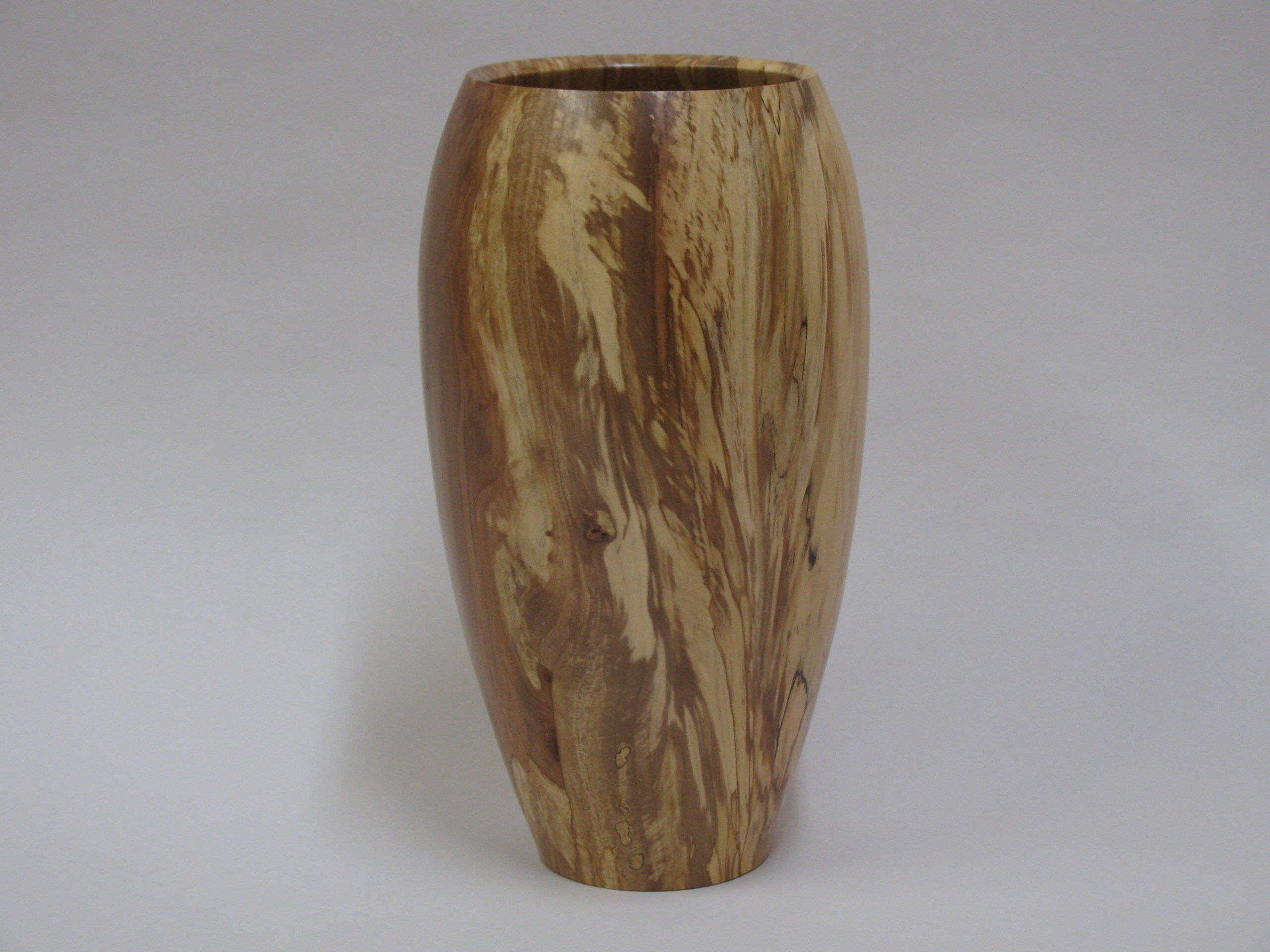
When you take a tree home, do you already have an idea of what you want to make from it, or do you let the wood inform your decision once it has been dried?
I guess it depends. I generally let the wood dictate what I end up making, but it’s a blend of my vision and what the wood will give me. For example, a tree service gave me a couple of large burls several years ago, and with burls being more figurative and more valued, I really had to evaluate the whole form and look at what I could get out of different pieces. Sometimes you can make bowls or maybe a vase out of the bigger pieces, but you also end up with all these tiny chunks left over. They’re too small to do anything of substance with but maybe they’re large enough to make a handle or wine stopper out of.
What is it about turning that appealed to you as opposed to other ways to work with wood, like furniture making?
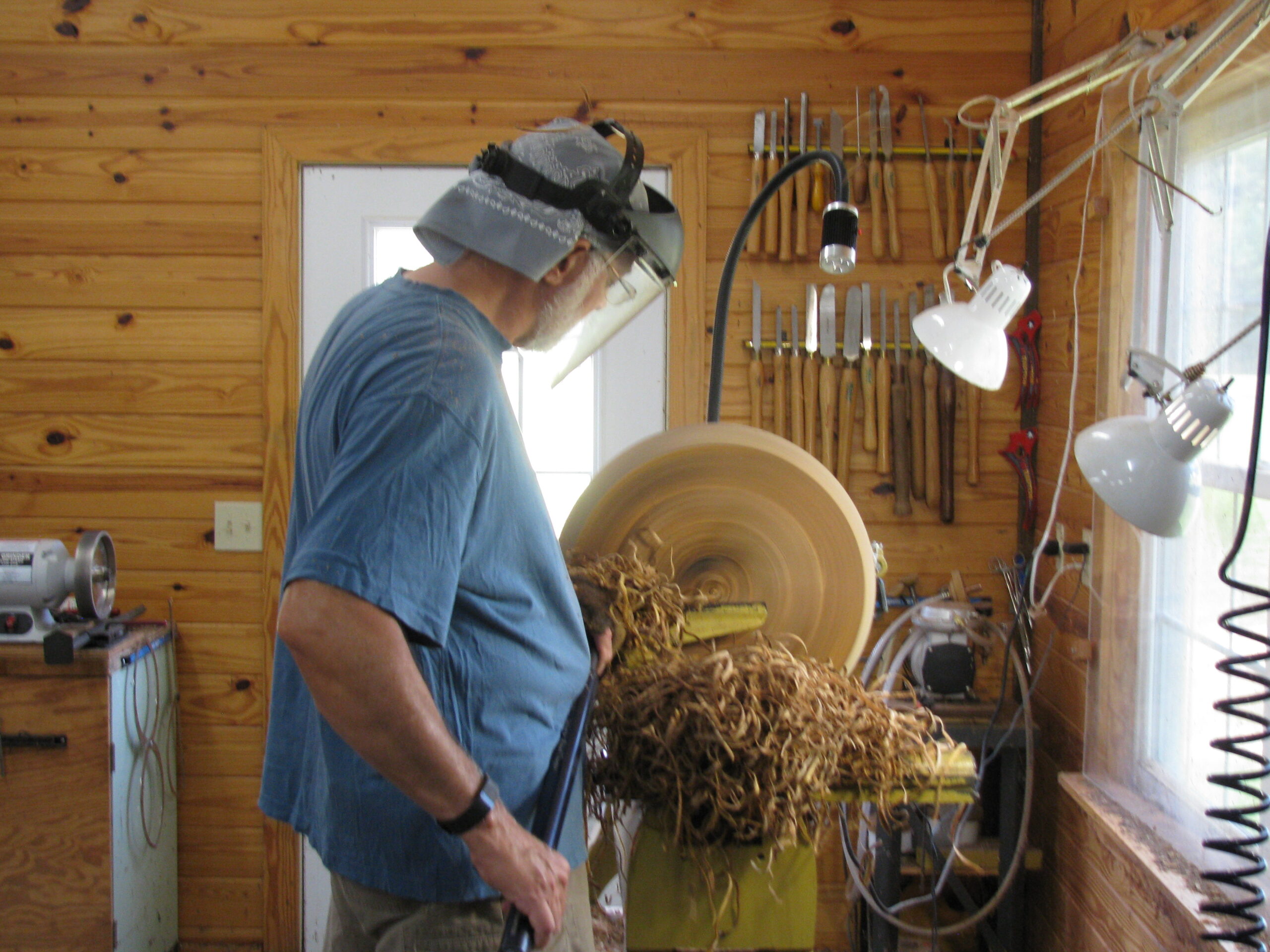
I think it’s the freedom to create a form or a shape. If you’re making furniture, it’s got to have 45 or 90-degree angles so that it will all fit together snugly. With turning, you have the piece mounted on a lathe, and you’re using a gouge to shape the outside of it.
One day during my turning class, one of my instructors brought in a piece of string. At first, he held it out straight between two fingers, but as he brought his fingers closer together, he said, “Look at the shape of the string that’s sagging. If you pull it in a little bit, you get a nice curvature for a bowl. If you bring your fingers in closer, you can do a form for a vase.” He was teaching us that you need a good visual of the piece so you can develop an appealing visual for the viewer. I was also taught to watch the top of the piece as you turn it so that you can refine the cut. If you watch your tool instead of the top of the piece, you may get off-base. Not all turn forms are appealing to me. It’s got to have a nice curvature and flow. I guess the real appeal is the freedom to create something out of a block of wood that can be considered art or functional.

Where do you find inspiration for your work?
When I started turning, there weren’t YouTube videos on how to do this or that, so instead I went to classes at the community college and woodturning symposiums. I liked looking at the work in the symposium galleries. Sometimes I would look at a piece and think, “Oh wow, I never thought of that.” Or there would be a demonstration going on how to do this or that, and I would think about how I could use that technique on something else to make a different form. Watching the demonstrations and learning from them sped up my process and helped me become a better turner.

Leave a Reply