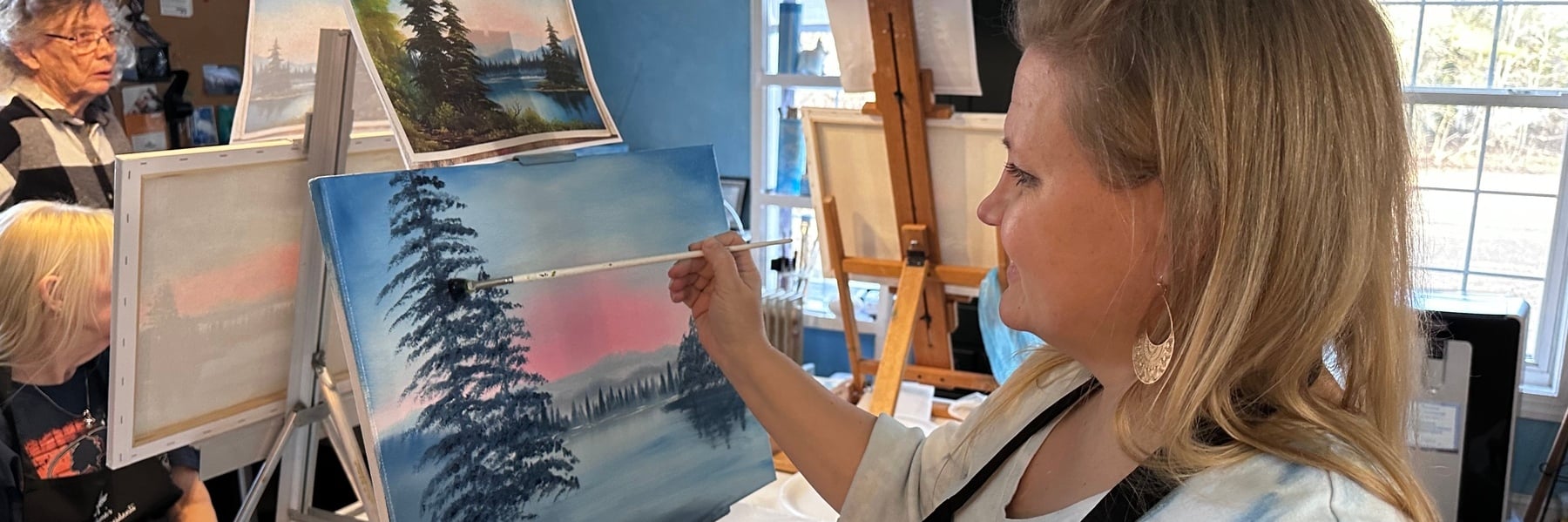
The Chatham Arts Council is investing in artists through our Meet This Artist series, introducing you to Chatham County artists each year in a big way. In celebration of our Chatham Artists-in-Schools Initiative season’s imminent kick-off, we’re circling back to a beloved Artists-in-Schools artist we last featured here in 2015. So, take a look. Meet your very inspiring neighbor.
Guest writer Corbie Hill penned this Meet This Artist feature. Corbie is a writer, musician, runner, and Star Trek superfan who lives in Pittsboro. Listen to Corbie’s music here, and find him on Instagram here.
Our Meet This Artist feature is made possible with support from the team at VRC, Ltd.
Even with a map, you’d have a tough time finding the house Michelle Pinto grew up in.
It’s between Siler City and Pittsboro, deep in the wooded acres her parents bought in the mid-‘80s. Land was cheap, bought with money her dad made digging ditches, and the family lived several years in a one-room shop with an outhouse and outdoor shower. The house came later. Pinto’s dad grew up in nearby Asheboro, hunting and fishing in Chatham, while her mom is from Mississippi, and they’d lived in the Devil’s Tramping Ground area previously.
“I was born in Siler City Hospital back when it was by the other end of town,” Pinto says from her art classroom in Siler City’s Chatham Middle School. “It’s home to me.”
Life in the woods meant hunting, fishing and total comfort in nature. Even as a little kid, Pinto was drawn to creating. Her mom would give her cross-stitch materials, for instance, and five-year-old Pinto would make her own detailed designs. Her creations were based in the world she knew: woods with pinecones on the ground, squirrels in the trees and birds overhead. Creativity connects Pinto and her mother to this day. Together with her sister-in-law, they teach art at Vacation Bible School in the summers.
As Chatham Middle’s art teacher, Pinto strikes a balance between exposing her students to artists and materials they likely don’t have access to at home and showing them what they can make with supplies most houses already have, such as needle and thread. She exudes kindness and empathy when she discusses her students, some of whom get in trouble in other classes but are calm and focused when they’re working on art. Through art class and Art Club at Chatham Middle, she consciously provides an outlet and a place to belong.
Our conversation with Pinto has been edited for length.
What’s your chosen medium or media as an artist?
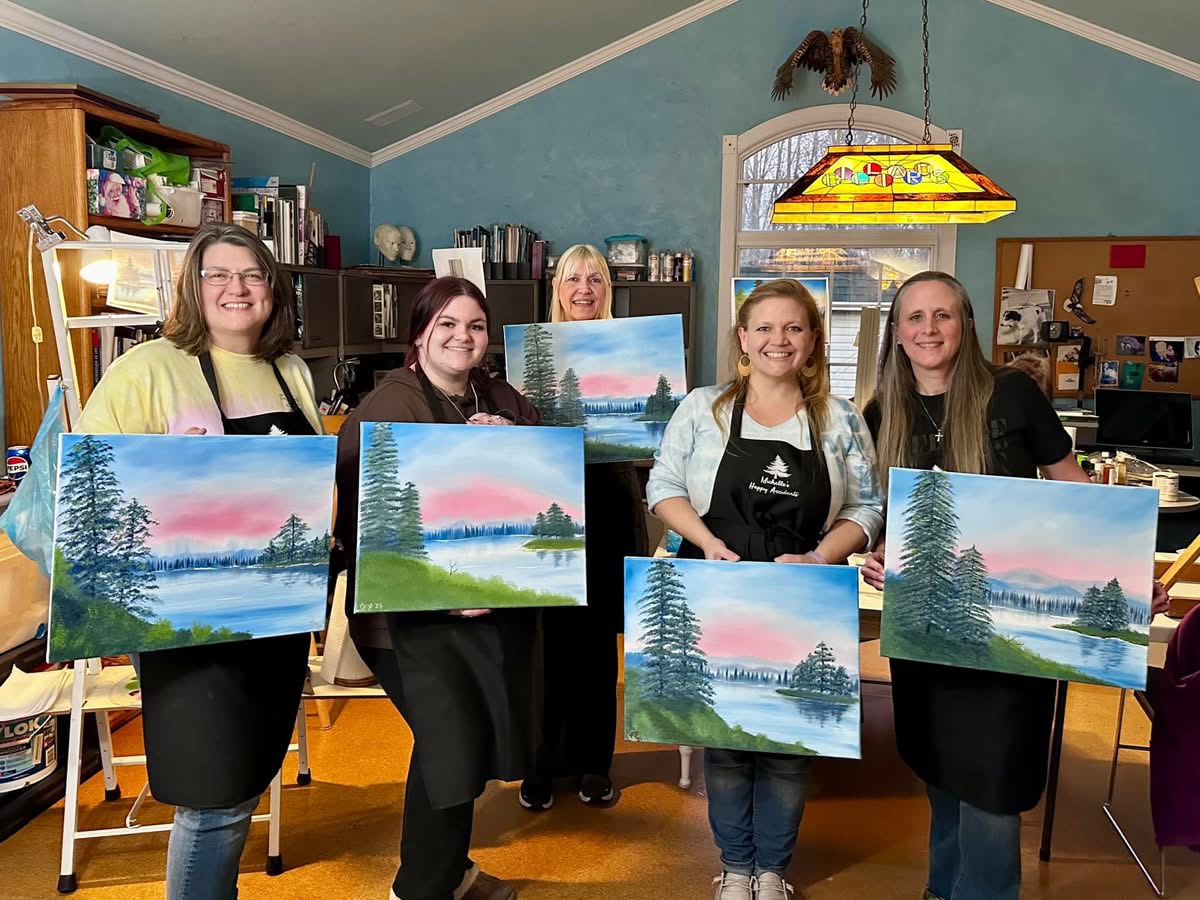
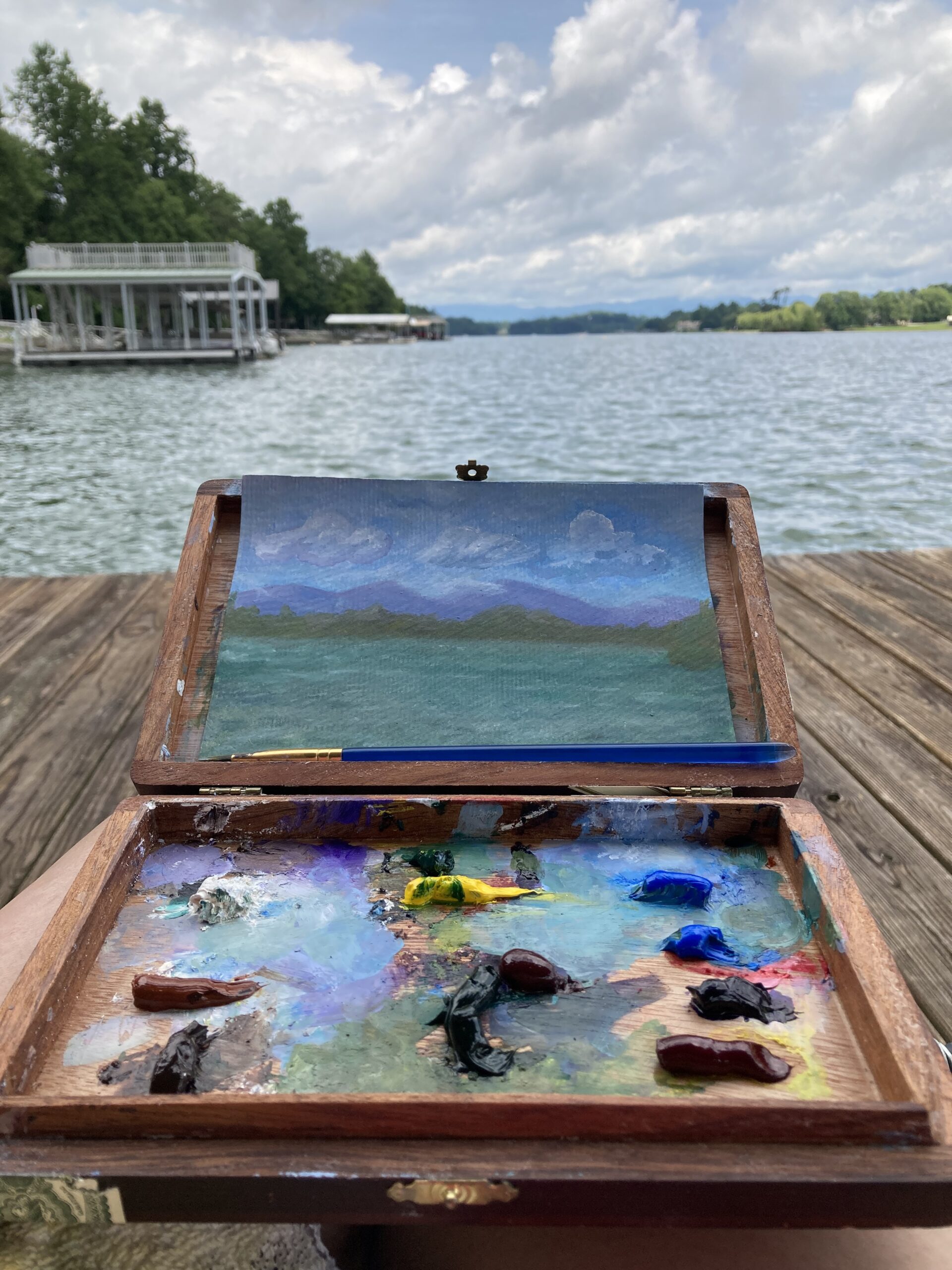
It changes quite often. During the summers, when I’m trying to relax, my favorite thing is when we visit a lake house, my husband and I and my daughter sometimes. I just like to sit on the dock and paint, usually just with acrylics, the same sunset scene. That’s my happy place.
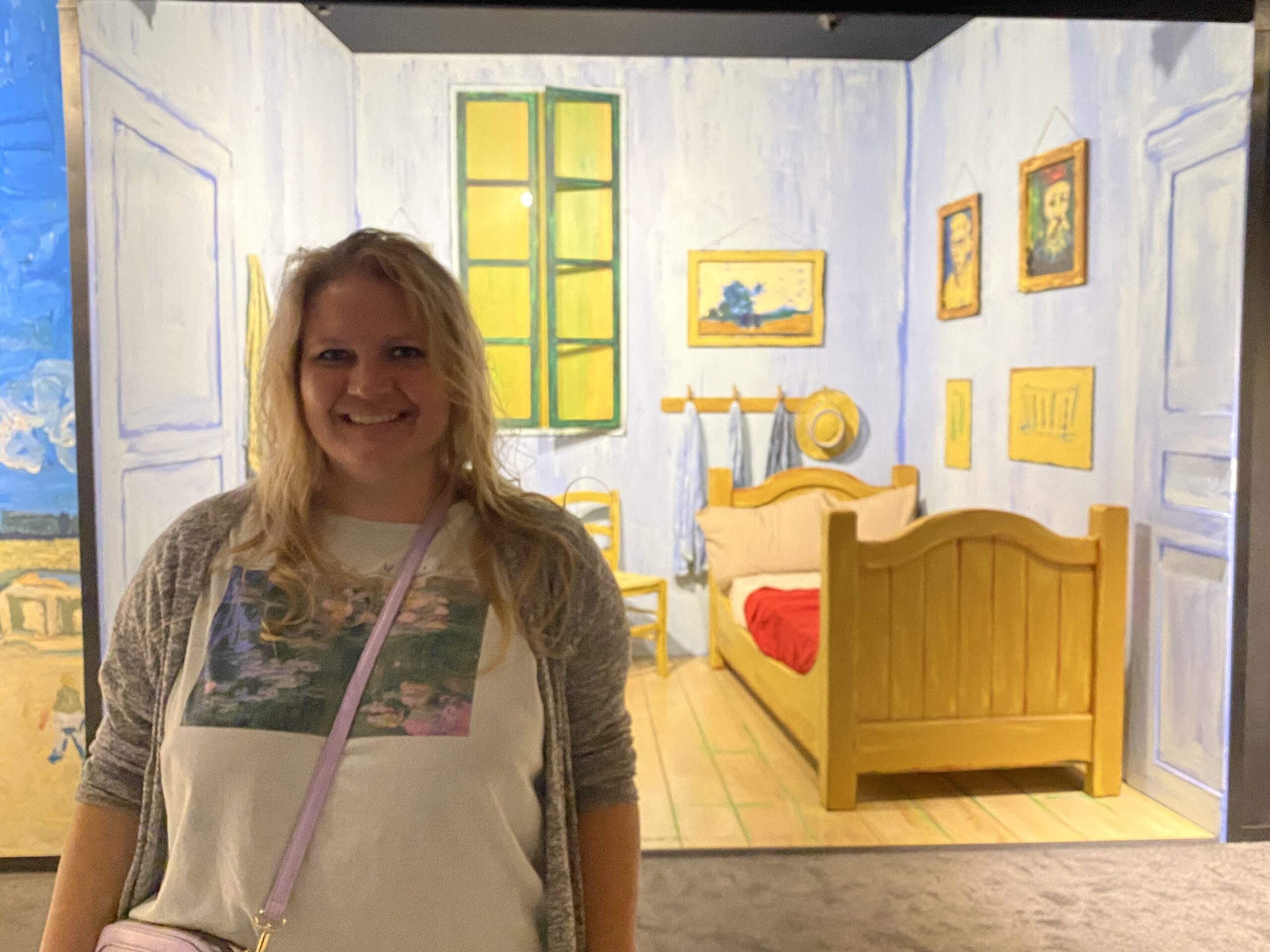
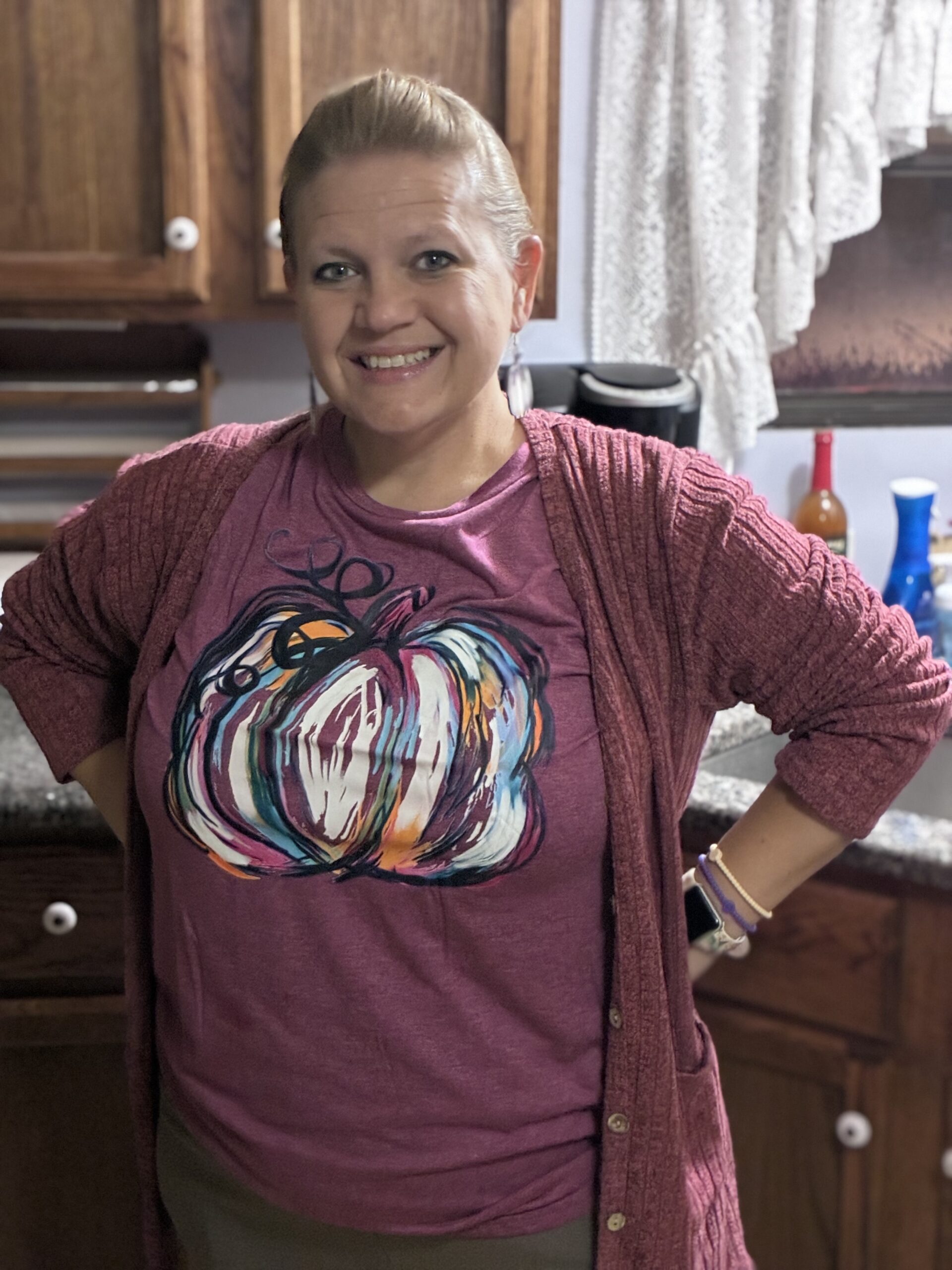
Different times of year, I like to do different kinds of more crafty arts. I love things like jewelry making, sewing, embroidery. I like to design t-shirts for different occasions. For example, this past summer was my best friend and I’s 30th friendiversary. Of course I had to design t-shirts for us to wear when we had a weekend away.
The thing that I like to do most with my arts is to make others happy.
Which lake for the lake house?
Lake Chatuge in Hiawasee, Georgia. It’s in the mountains, right past the border of North Carolina and Georgia. It’s just a gorgeous area.

I’m fascinated by you painting the same sunset. When you look back at the paintings, what variations do you see? Does it take you to the same place in your mind and emotionally?
Even since I was a kid, I’ve always loved looking at the sky. To me, that is God’s most beautiful artwork. It’s never the same. Every time you look at it, it is a different color. There are different clouds. Even when it is the same, it’s still got its own variations, kind of like every moment of the world.
(Wipes tears) I don’t know why that made me emotional. I’m not usually an overly emotional person. It really is kind of awe-inspiring to be able to see how it’s different. When you end a day, especially a day that’s been a little bit challenging, just driving home and seeing the sun setting, especially over certain places that are familiar to you…
There’s this one spot on Hadley Mill Road that is my mom’s favorite view. There have been a couple times where I’ve actually stopped and taken a picture of the sunset over this one dead tree right beside a live tree. Nature is just beautiful to me.
It’s very important that the kids get opportunities. Growing up rural, you maybe don’t always have access to all of the different forms of the arts and things like that. In the classroom, I like to do a lot of variety of different materials that they might not have access to at home. I also like to sometimes take it back to things that they might be familiar with. The project that we’re finishing up right now is sewing. Most people have a needle and thread or access to one and don’t realize how much that can be art.
We’ve looked at some great artists that do some really cool things, like Victoria Villasana stitches over black and white photographs and makes them bright, vivid patterns and beautiful things like that.
I found it really interesting to see some of the kids that are often in trouble because they can’t stop moving their bodies sit very still and want to complete a project and then do another one before everybody else gets finished. This one little boy in particular yesterday was like, “Can I send you another picture?” I was like, “Well, our next project is going to be making greeting cards. Would you like to sew yours instead of paint it?” Seeing it be able to have such a calming effect on someone—it’s really cool.
Working with your hands is calming, and that kind of focus is calming. Is that what you’re seeing with these kids?
I guess it’s cathartic. It’s very intentional. Once you’ve done it, it’s also very second-nature. You don’t really have to put a lot of thought into the creation process, just kind of let it happen. That can be kind of freeing. I think that’s why art therapy is so useful. That’s something that I’m considering looking more into.
Is art what you pursued in school?
After high school I went to school for computer art and animation. My dream was to have the ability to do special effects in movies. When I went to the school, I asked the CEO or president or whatever he was, “I want to be able to make Arnold Schwarzenegger explode out of a helicopter. Is that what we do here?” “Oh, of course it is.”
It was not. We did mostly the more simple cartoonistic type of animations for video games and things like that. It wasn’t exactly what it was promoted to be. I don’t look back on that with regret at all, because that is where I met my husband.
[Afterward], I worked with a gentleman who was a nurse at the Chapel Hill hospital in the ECT unit. We did a lot of instructional videos, using the education that I had on instructional videos and pamphlets and animations that show how receptors bind to certain chemicals and explain to patients what’s going to happen to them when they do these treatments.
During my time working there, I had my daughter. Watching her develop and grow, I was like, this is really interesting, how she picks up different information and how she’s looking for information. That’s when I decided to go back and get my bachelor’s so that I could teach.
I taught at a school for children with disabilities in Sanford for seven years. I decided to go back and get art added to my [teaching] license. I taught in high school for four years and loved it. I went back to Sanford and taught for three more years at elementary level.
When the position opened here, I interviewed. The principal at the time happened to be the principal at my daughter’s school when she was in third grade. When I walked into the interview, Mr. Morgan was like, “You’re Courtney’s mom.” It’s like, my daughter’s in high school, and you remember her from third grade. This is where I need to be.
How long have you been at Chatham Middle?
This is my fifth year here.
The thing that probably sticks in my head the most is how Art Club is so fantastic for the kids that maybe are not sports-related or maybe aren’t the most academic. I’ve had Art Club the whole time I’ve been here, but over the past couple years I’ve teamed up with the North Carolina Museum of Art. They have a fantastic program in which they provide local artists for Art Club, they provide transportation and snacks and materials for the students to come and participate in Art Club.
It makes such a difference for kids to have access that maybe wouldn’t necessarily be able to participate in after school activities without transportation, and for those kids to have somewhere where they belong and they’re accepted. They get to be creative. They get to collaborate and work together.
We’ve had the same artist keep coming back, because I’ve asked. Jessica Rigsbee was actually, at one time, a teacher here. She connects really well with the kids and has such great ideas. We’ve made a mosaic two-sided sign out in front of the school. We’ve painted inside of the school. We’re currently doing some stained-glass windows for the office area, different things that are collaborative. The kids see that we can make this place as beautiful as we feel that it is. It gives them some unity. It gives them a way to give back a little and make them know that they’re important.
If they’re painting the building, if they’re working on a stained glass window—that’s lasting.
Absolutely. That’s part of what we want to do with art club. We definitely want to do things that are individual for the students, to be able to keep, but we also want them to be able to see their legacy and to know that they have an impact.
How has collaborating with another artist impacted your work?
Jessica’s not afraid to try new things. All of the things that she’s tried in her own profession, she brings that knowledge to the kids. I love that she’s bilingual, because a lot of our students here need that as well, and it’s hard to find local artists that have that. Her energy is super positive. She’s really supportive, not just to the kids, but also to myself. It’s great to bounce ideas off of her.
Is there anything I haven’t asked about that you would want to bring up about your teaching style or how you engage with the students?
With the students, I want them to have experiences with art that are positive and that, again, they might not have access to at home. A lot of our students are not very financially stable. A lot of our students might not have everything at home that some more well-off urban areas students might have. I like to have things in the classroom that might not be as accessible. I like to be able to do clay with students. I like to be able to have different stamps and different materials.
I see things that I use in the classroom as being useful, not just in an art classroom environment, but also in building what your skills will be for the future. I like to tell the kids, “Right now we’re sewing, but if you like sports cars or boats, upholstery is a really lucrative career option. You can customize stuff, and it can be really cool if you like fashion.” Even my sweatshirt—I wore it today because we’re doing sewing, and it has this embroidery look.
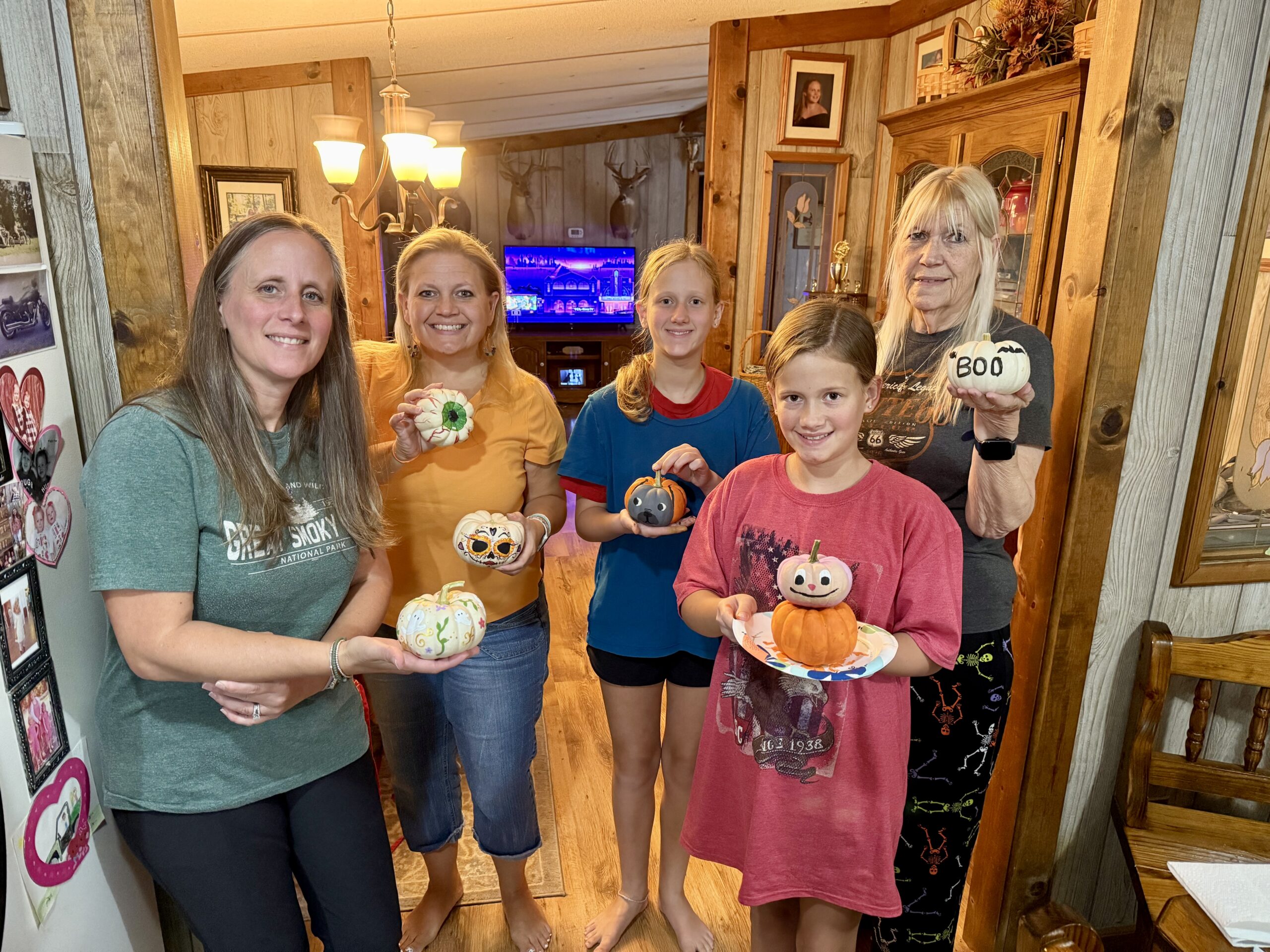
I try to do that to inspire the students, not just by what I’m doing and saying, but also what I wear, how I act, how I interact with my colleagues. That’s learning skills for being able to interact with your own colleagues when you grow up. Our arts department here is super strong. We’re so supportive of each other. We’re there for each other. It’s important for them to hear how we talk to each other. It’s important for us to talk to [the students] in a positive way and just let them know that they matter, let them know that we care.
These kids really need the social-emotional learning more than ever. This particular year, the behaviors have been more challenging than any year in the past. I definitely see that that’s important, that they can connect what they create with the emotions that it causes, and that they can express their emotions with their artworks.

Leave a Reply