
The Chatham Arts Council is investing in artists through our Meet This Artist (MTA) series, introducing you to 12 Chatham County artists each year in a big way. The fine folks at Hobbs Architects in downtown Pittsboro are powering our Meet This Artist series this year. Architecture is art, and the Hobbs crew values art in our community. So, take a look. Meet your very inspiring neighbors. The guest writer for this Meet This Artist is Rachel Flanagan.
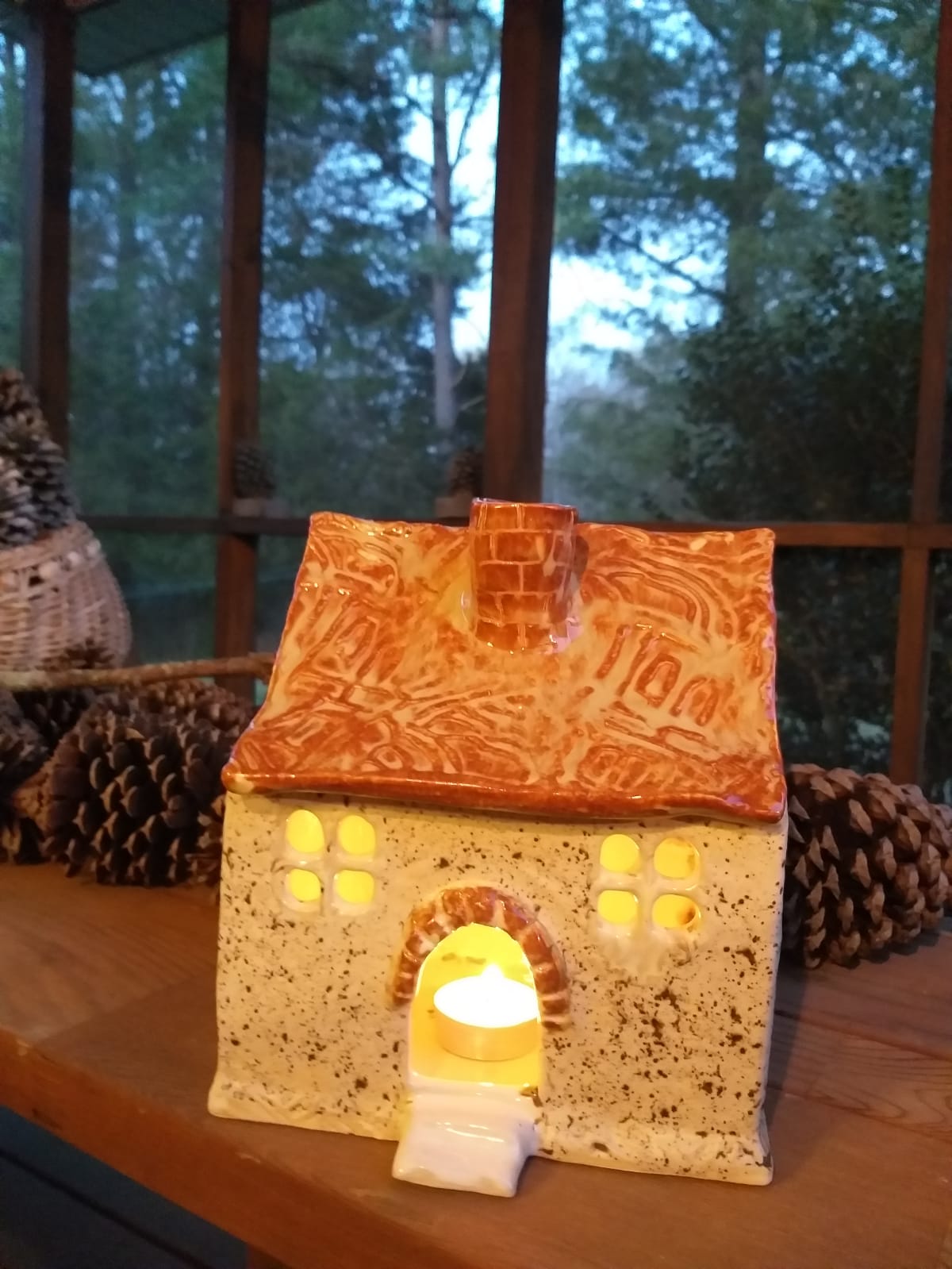
Within the first few minutes of meeting ceramist Melissa McLauren, you are drawn in by her warmth and ease. After leaving her home in St. Lucia to move to North Carolina to be with her husband, Melissa set up shop at the NC Arts Incubator in downtown Siler City. Melissa soon joined the community of artists and students that populate the Incubator, all working together toward growing the artist community there. She is fiercely proud of her St. Lucian upbringing, which comes out in her childhood stories and her pottery, with beautiful scenes of the Pitons and small versions of clay pots, often used for cooking. We invite you to learn more about this talented ceramicist!

Tell me about yourself.
I’m from Saint Lucia. Before I moved here, I worked for the Saint Lucian National Trust, which aims to protect the natural and cultural heritage of the country. The goal is to work with the environment sustainably, in a way that people can benefit from, balancing the need to generate income but also taking care of the country. Many times we as citizens don’t value what we have, but it’s a good thing that other people come from outside and see what we have and value it. They’re willing to help us fight so that it stays the same. The goal is to be able to obtain a livelihood without disturbing the environment too much.
Have you always been artistic and creative, even when you were small?
Yes. My mom and dad had an upholstery business. I helped with things like cutting foam for the pillows or taking out staples in a chair to reupholster it. They had to design everything. They made chairs, boat seats, and my dad even made coffins by special request. He even made a refrigerator – he built it himself.

I love to draw, and I love to imagine things. I never thought of myself as creative at that time, I just thought I was just being me.
What brought you here to the US?
I came here because of my husband, who is American. We met when he was working for the Peace Corps. After serving in Ethiopia, he came to St. Lucia. At that time, I was taking care of my mom and dad. My dad had Parkinson’s and my mom was going blind. He started to visit me a lot. He came, we talked, and he invited me to yoga. That’s how it started. Adjusting to living here hasn’t been too hard. I learned how to adapt well when I was growing up. We never had the luxury of everything at our fingertips. We were taught how to manage with what you have and do your best.

Before I came here, my husband asked me, “What would you like to do in America when you come?” I told I’d like to do ceramics, which I’d never done before. But I’ve always loved art because we are a community of artists in St. Lucia. We have a Nobel Prize winner from there. Two, actually. One is Sir Derek Walcott, who was a poet, playwright, and a painter. The second Nobel Laureate is Sir Arthur Lewis. He received the 1979 Nobel Prize in Economic Sciences. The top and most respected college in St. Lucia is named after him, the Sir Arthur Lewis Community College.

When you’re an artist, you do not conform. You do not allow yourself to be placed in a small box. And even if you have a career in something other than the arts, you can do artistic things also. I always encouraged my nieces and nephews to have a career in mind, and that it’s okay to be an artist. It’s okay to be a lawyer and an artist. It’s okay to be a fisherman and an artist.
How did you decide to focus on ceramics when you moved here?
When I came, I enrolled in the North Carolina Community College night classes to do ceramics. I’ve also been volunteering at the North Carolina Pottery Center in Seagrove. I always believe in giving back to a community wherever you are. That’s why when we came here, I wanted to get a studio space at the Incubator, even while I was going to the college.
It seems like volunteering comes naturally to you.
When I worked for the National Trust, I had to organize events and often encourage people to volunteer. If you have to encourage people to volunteer, you have to be a volunteer yourself because people are not going to want to go pick up the plastics on the road if you’re not willing to do it yourself. When you’re a leader, you have to be able to do even the smallest of things.
What do you like about the Incubator?
I like that it’s community-based. They help artists. They don’t charge you too much for the rent. If you want to show your pieces, they’re there to support you. And if you want to sell your stuff, you could always use their space outside in the courtyard or inside the Chatham Rabbit, or downstairs. I also run classes.
Have you collaborated with any of the other artists here?

I have collaborated with Phyllis Rankin, who just passed away, sadly. We did a showing at Duke Divinity. I met her a year ago and she came back looking for me, saying that we needed to do a collaboration. So in February this year, she came and told me that one of the students was putting something together for women in diversity and the art form at Duke Divinity, and asked whether I’d like to come and show my work there.
How do you feel your St. Lucian background has informed your art?
It has influenced my art in the way that I shape my pieces, the art form itself, and the art actually on the pieces. St. Lucian culture shows up in many ways: in our clothes, our manner of speaking, our arts, and our food. Our culture is so alive in everything. So we put it in our designs, we put it in our art, and we put it in our writing, like Derek Walcott did during his time. I feel our culture is so unique. The culture of a country is very important. When you lose that, you lose yourself.
Who inspires you?

I am most inspired by God and the things He has created. For example, it is amazing to see how plants, animals, and human beings rely on one another to co-exist. All the things we can see, touch, and smell are beautiful and they inspire me to create art.
What would you say to a young artist, either from St. Lucia or from here about following their interests? What advice would you give?
I would tell them it’s alright to follow your dream but make room for anything that comes along the way so that you can adapt and you won’t be disappointed. You never know where things will lead you. When something comes along, you may not think that that’s what you want to do, but life leads you down another path. At the end of the road, there’s always something positive to find.
Leave a Reply