Flamenco Vivo Carlota Santana Brings the Rhythm of Spain to Bennett and Bonlee Schools
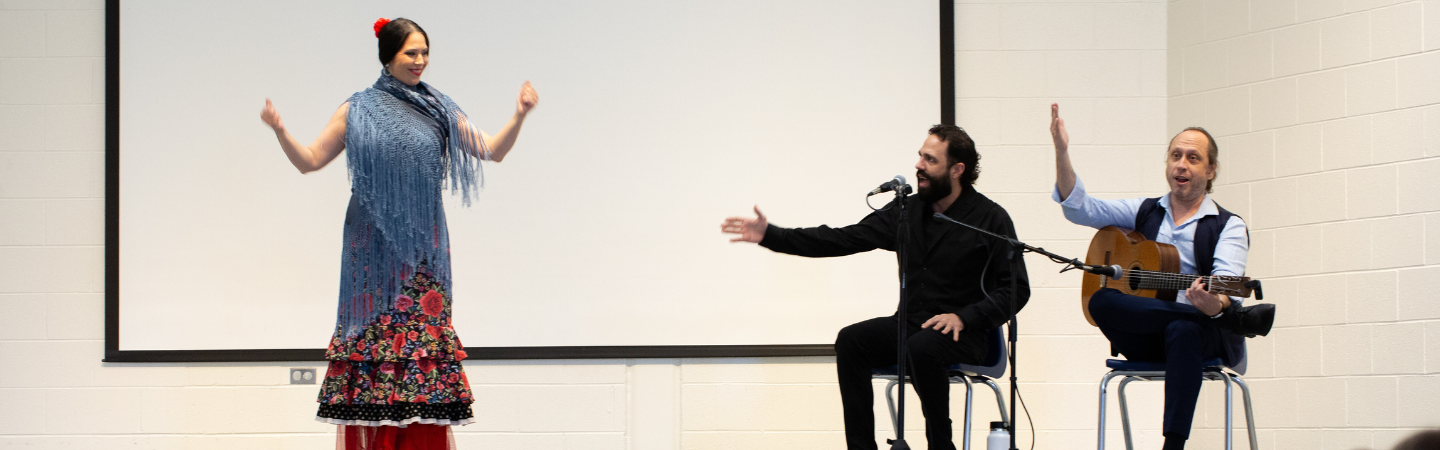
What happens when you bring a flamenco dancer, a guitarist, a percussionist, and a little Spanish magic into a school? You get three days of clapping, stomping, singing, dancing—and a whole lot of students discovering they have some pretty impressive moves!
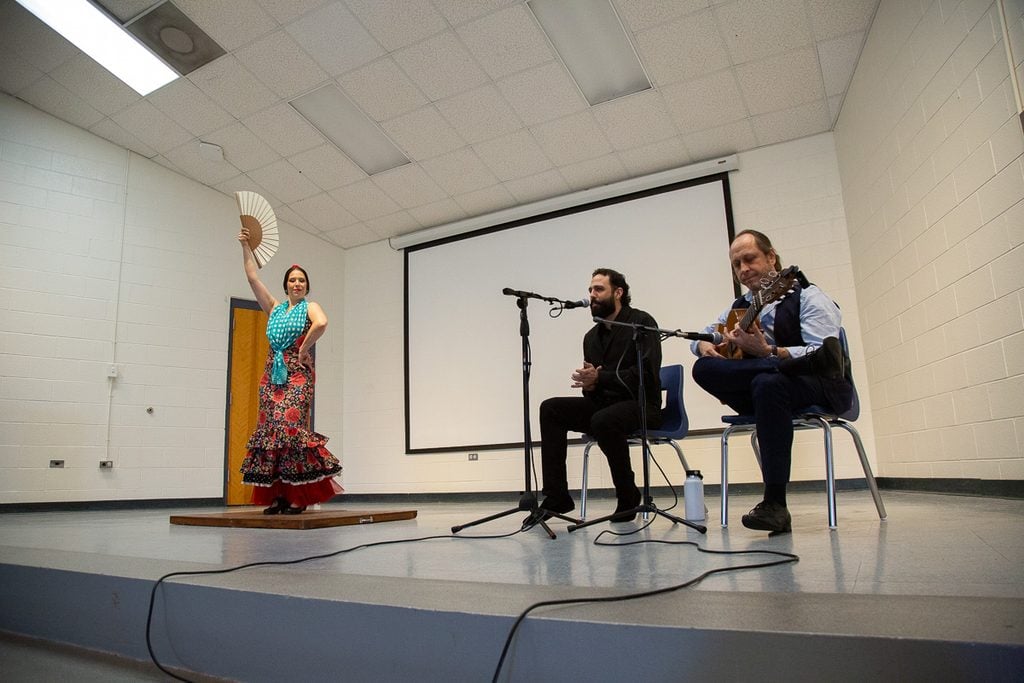
October 12–14, Nationally recognized dance company Flamenco Vivo Carlota Santana brought the vibrant sights and sounds of Spain to Bennett and Bonlee Schools through a Chatham Arts Council Artists-in-Schools residency. And from the first strum of the guitar to the final four-count beat, students were in for a cultural adventure. But this wasn’t your ordinary school assembly.
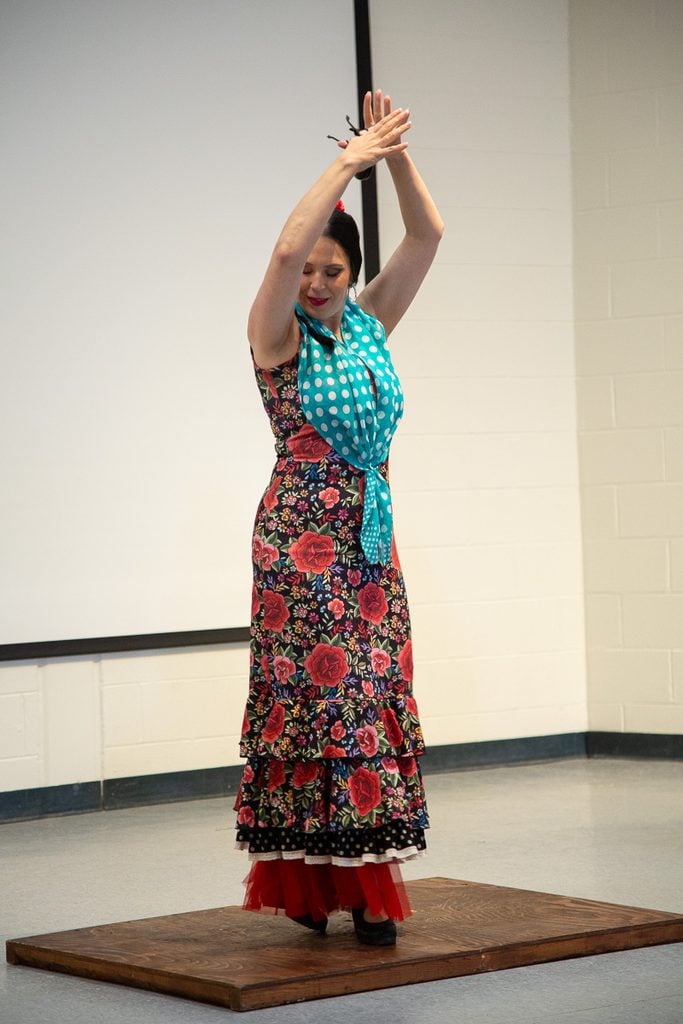
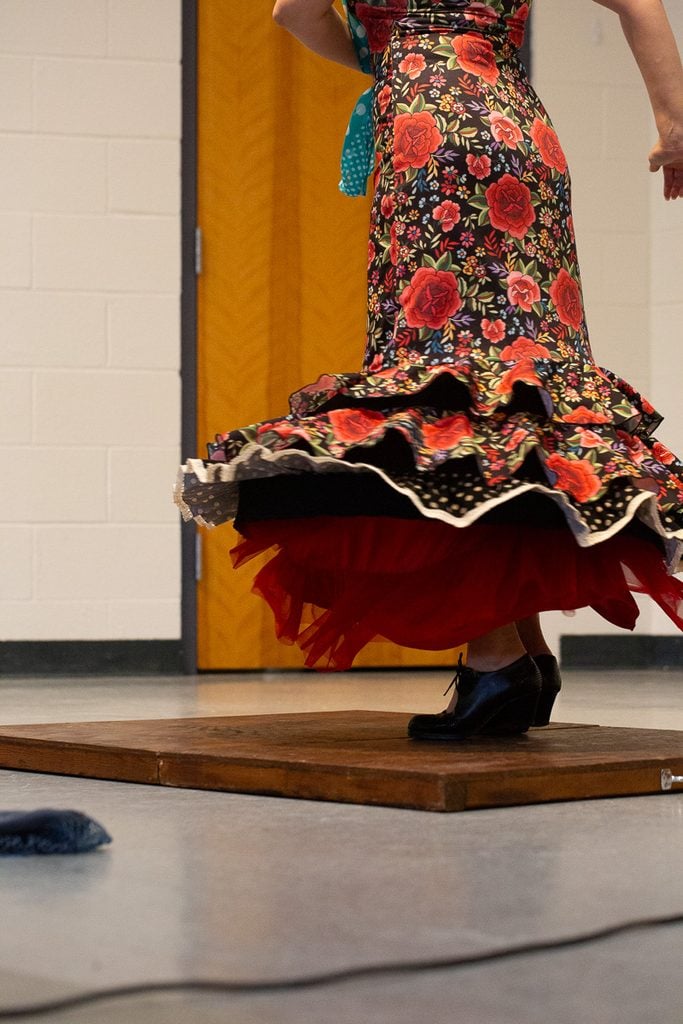
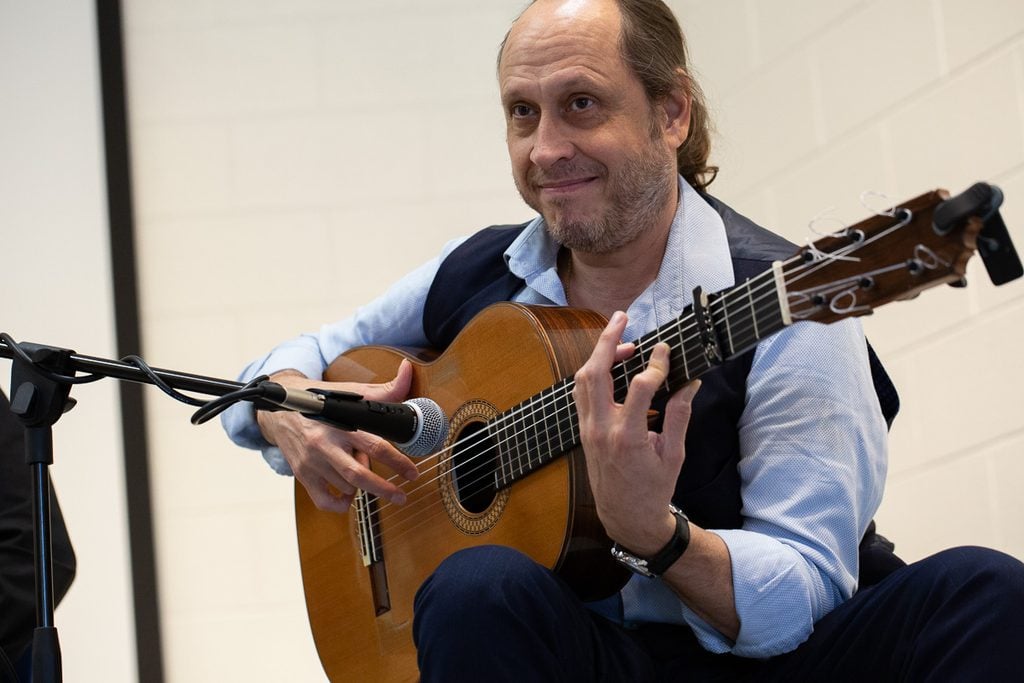
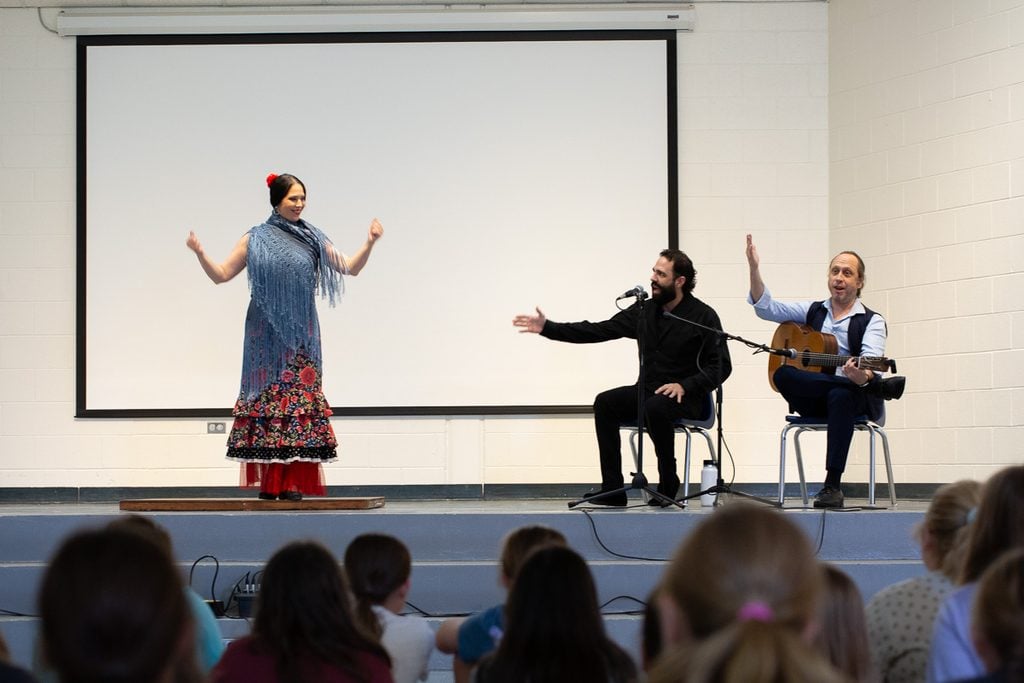
The experience began with a performance that took students on a magical journey through the traditions of flamenco. With a dancer leading the story, a guitarist bringing the melodies, and a percussionist and singer adding rhythm and voice, students discovered that flamenco is much more than dancing. It’s storytelling. It’s culture. It’s community. And, as the artists explained, it’s a little like keeping a party going. When the music and dancing stop, the party stops! And nobody wanted this party to end.
Along the way, students learned about the essential elements of flamenco: rhythmic handclapping called palmas, guitar, singing, and dancing. They discovered castanets, explored traditional movements, and learned about flamenco’s roots in Spain. And, of course, students learned one of flamenco’s most recognizable expressions: “Olé!”
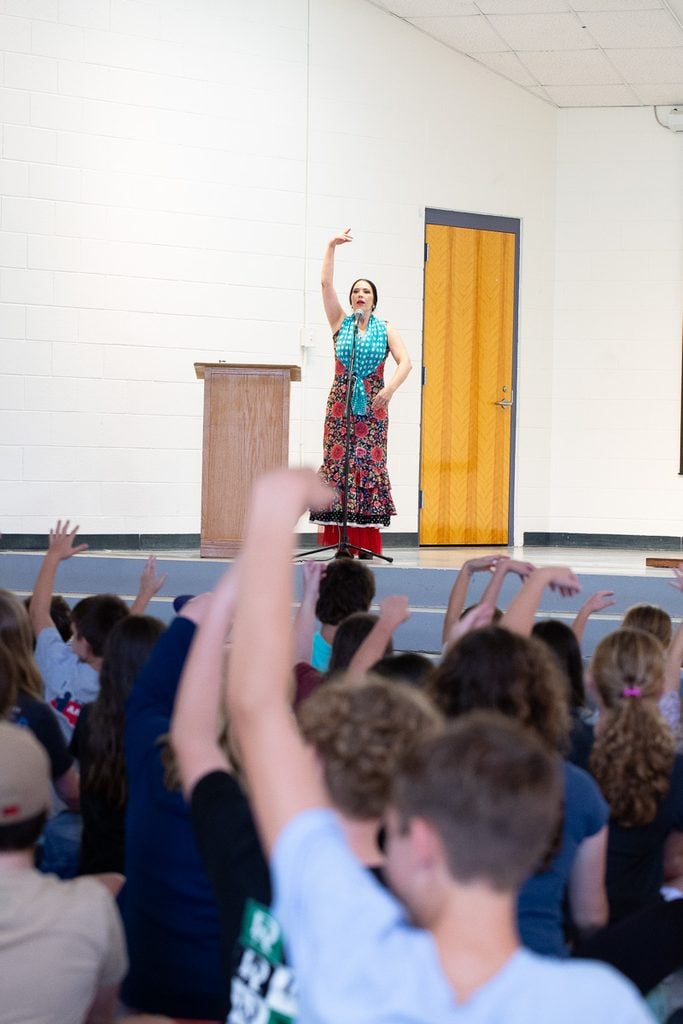
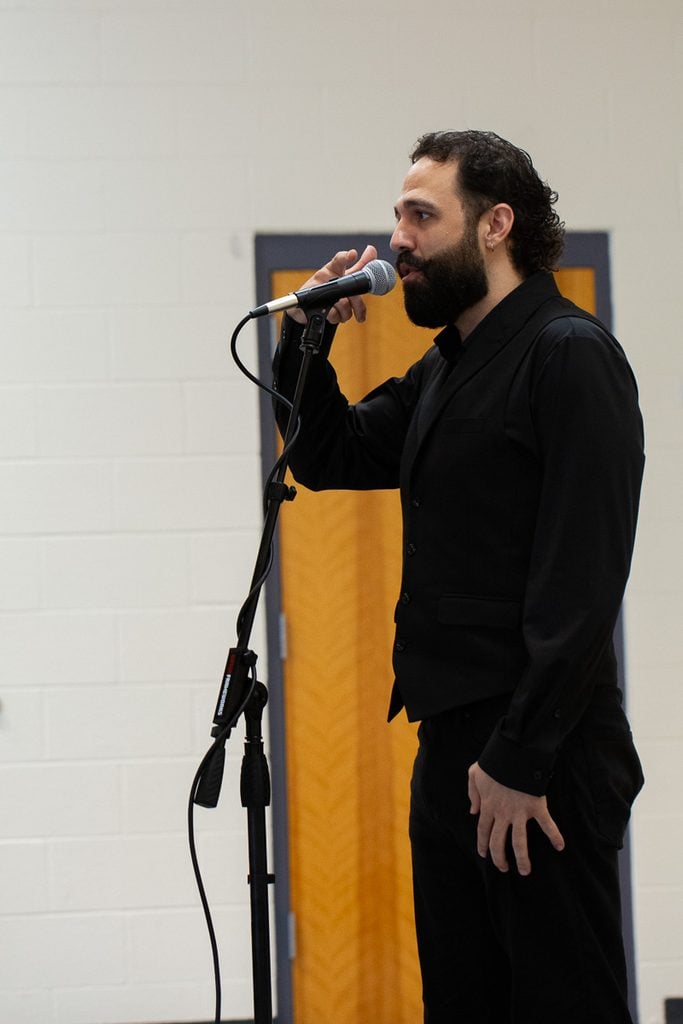
But it’s much more than just a fun word to shout. In flamenco, olé is an expression of excitement, admiration, and encouragement. It’s what you call out when a dancer makes an impressive move, a guitarist plays an incredible passage, or a singer delivers a powerful note. It’s a way of saying, “Wow! That was amazing! Keep going!” And once students understood its meaning, they knew exactly when to use it. Because sometimes a performance is so good, a simple round of applause just isn’t enough.
The guitarist showed students how flamenco musicians use their fingers instead of a pick to strum the guitar. Suddenly, hundreds of little fingers were strumming imaginary guitars in the air. The singer guided students through breathing, humming, and singing words from the story. And the dancer demonstrated how a simple movement, like reaching up to pick an apple, could become part of a beautiful flamenco dance. Who knew picking apples could look so graceful? The dancer’s flowing scarf and dramatic fan were instant crowd favorites. As students left the performance, the excitement was obvious. One young girl announced, “I’m going to go home and use my mom’s scarf. It looked so pretty!”
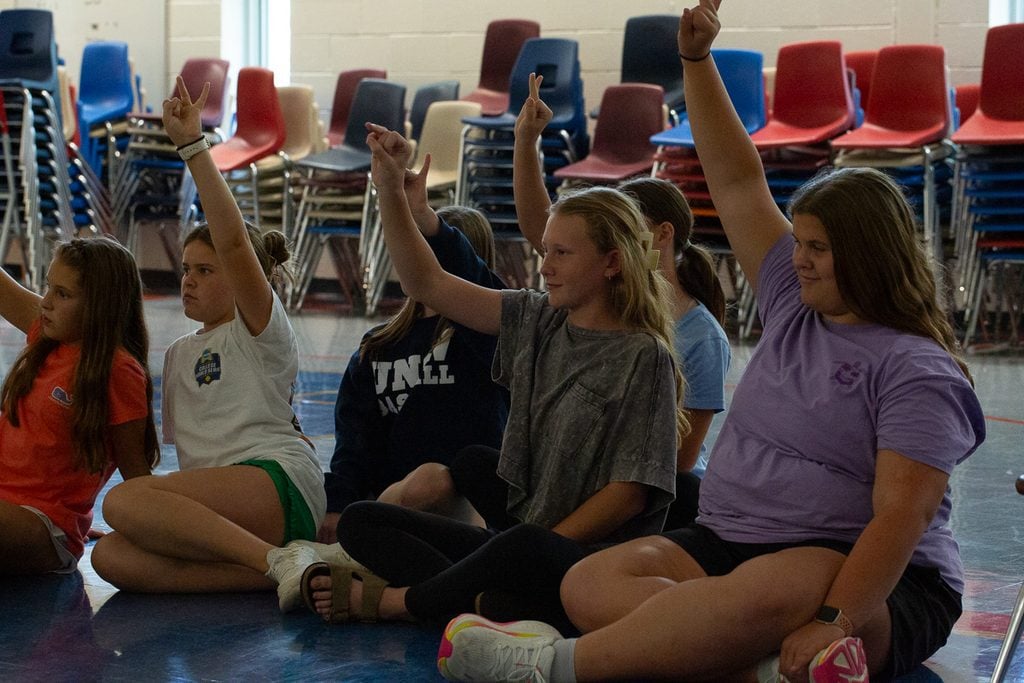
The students were equally fascinated by the artists themselves. During the question-and-answer session, hands shot into the air.
“How often do you change your guitar strings?”
“Where are you from?”
“How old were you when you started dancing?”
“How old ARE you?”
That last question earned a playful response: “Use your imagination!”
Students were amazed to learn that some of the artists began studying their craft as early as age three, had spent more than 20 years developing their skills, and had all studied in Spain. When the performers shared the places their careers had taken them—New York, California, Texas, Tennessee, North Carolina, Spain, and beyond—a few students couldn’t contain themselves.
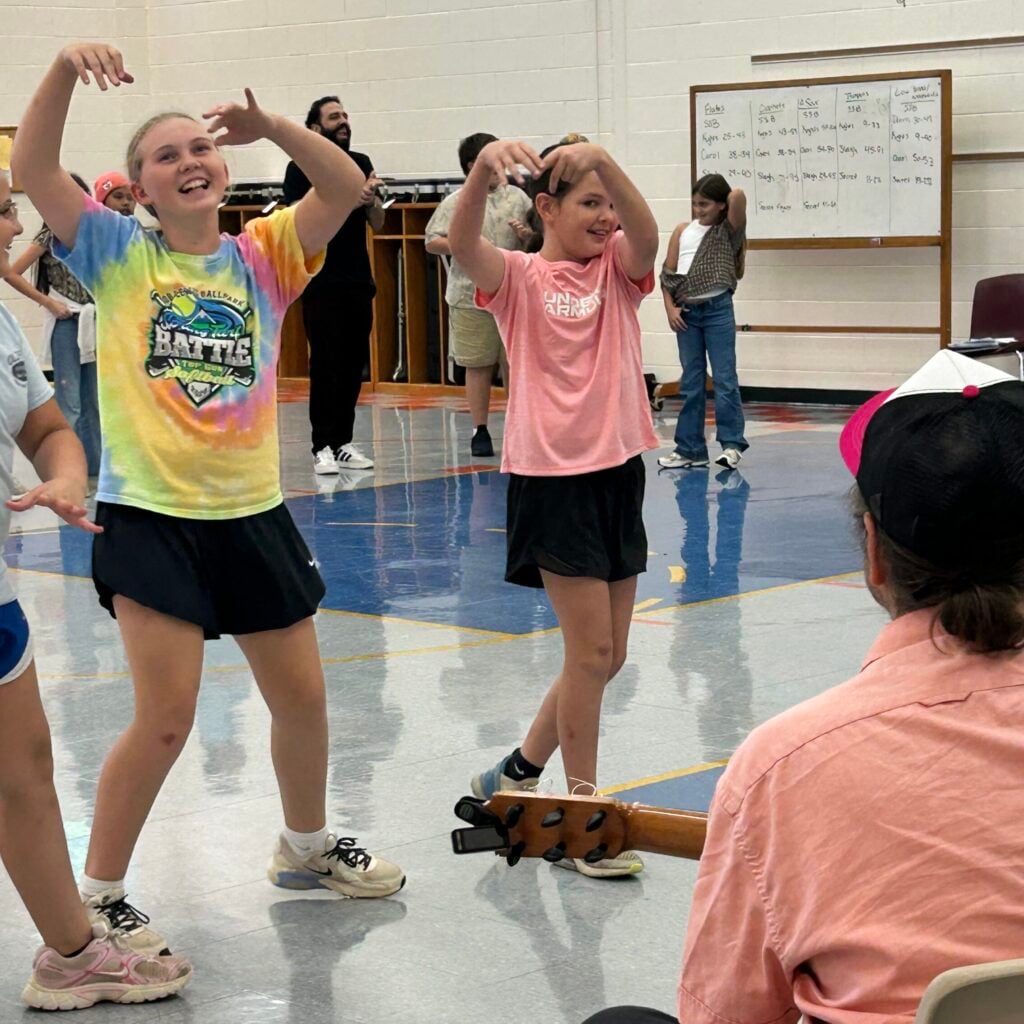
On Days Two and Three, students traded their seats for the dance floor. Through rotating workshops, they learned flamenco rhythms, practiced singing, and worked together to choreograph original dance movements. Of course, not everyone was immediately convinced that dancing was for them. When we asked students if they were excited about the upcoming workshops, most responded with an enthusiastic yes. A few, particularly some of the boys, weren’t so sure.So we offered a little perspective.Did they know that professional athletes often use dance training to improve agility, balance, coordination, and muscular endurance? Suddenly, we had their attention. “Really? Are you sure? You’re not tricking us, are you?” No tricks. Just a little science behind the art of movement. And before long, those same students were counting beats, practicing rhythms, experimenting with choreography, and discovering that flamenco requires some serious coordination.
One, two, three, four!
Clap. Clap. Stomp. Turn.
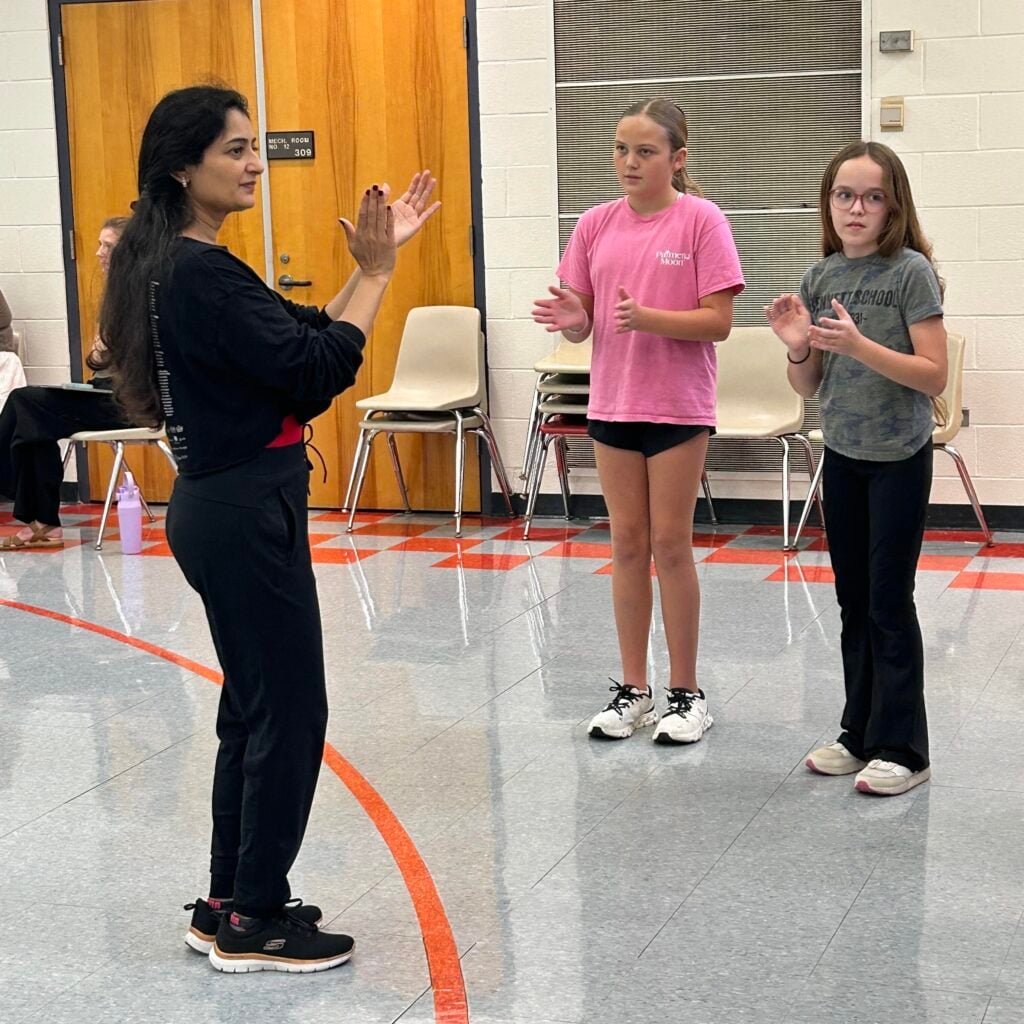
There were missed beats. There were giggles. There were moments when feet and hands didn’t quite cooperate. But there was also teamwork, creativity, persistence, and the unmistakable joy of learning something completely new.
By the end of the residency, students had put their new skills together to create their very own flamenco dance. They weren’t just learning about Spanish culture anymore. They were experiencing it, one four-count beat at a time.
And remember those boys who weren’t so sure about dancing?
On the final day, one young man proudly announced, “Well, I guess I’m ready to be a pro baller since I know how to dance. Look out, ESPN!” Now THAT is a successful dance workshop.
And that’s the magic of an Artists-in-Schools residency.
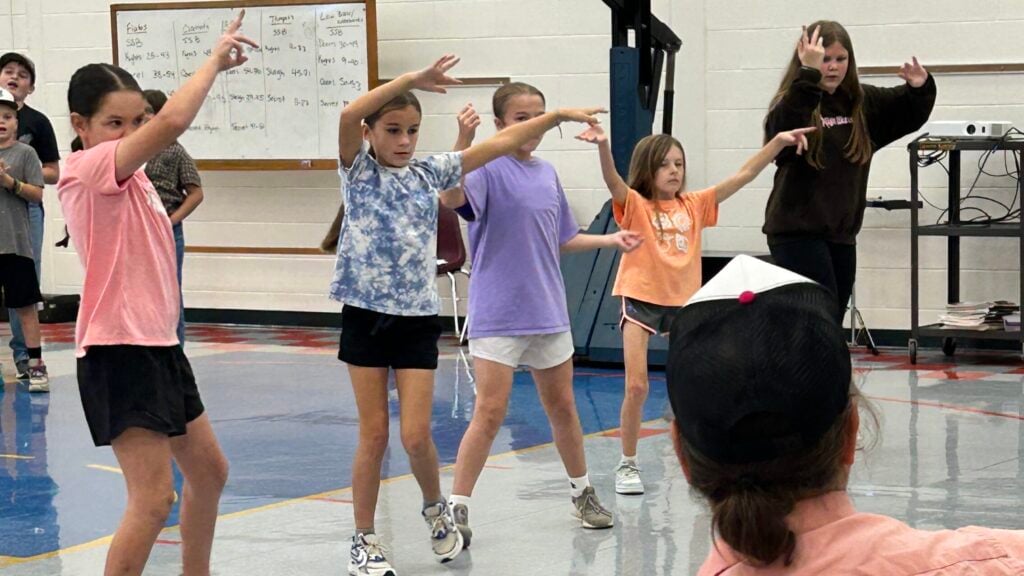
Sometimes cultural understanding begins with a history lesson. Sometimes music appreciation starts with the sound of a guitar. And sometimes, for three days in October, it looks like students clapping, stomping, singing, laughing, and discovering that learning to dance might just make you a better athlete and it could just be fun.
From the flutter of a colorful fan to the rhythm of hundreds of clapping hands, Flamenco Vivo Carlota Santana brought a little piece of Spain to Bennett and Bonlee—and left behind a whole lot of new dancers.
When the music is playing, the feet are moving, and the students are smiling, there’s only one thing left to say…
Olé!
Leave a Reply