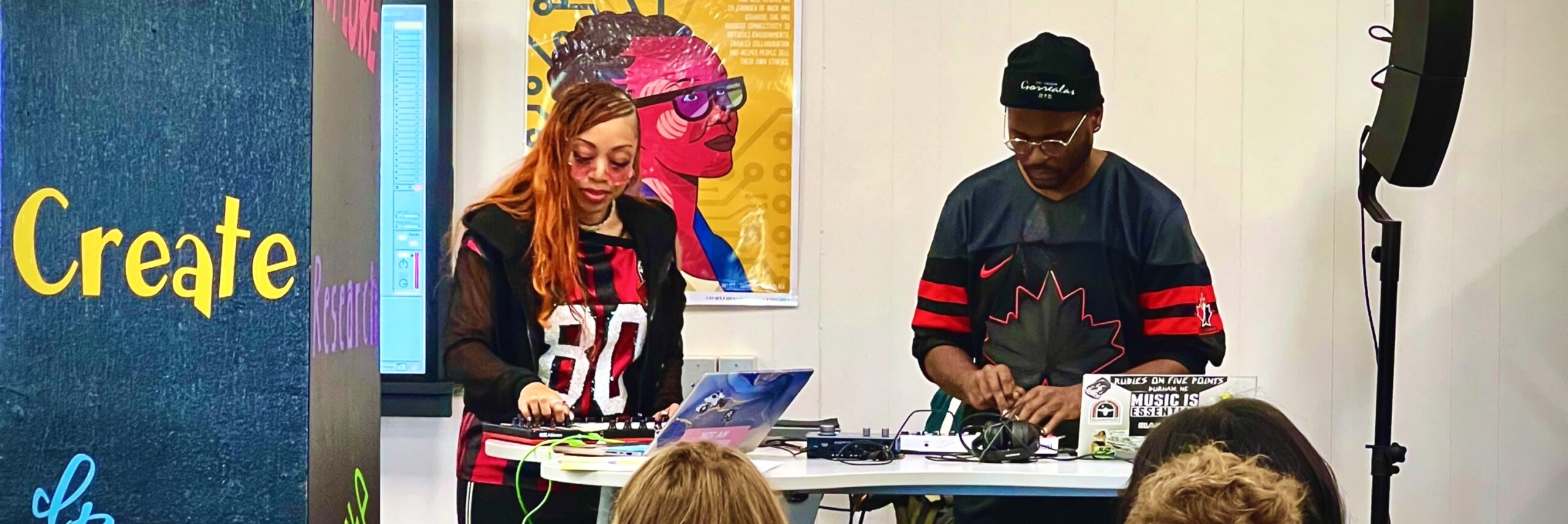
Blackspace’s REM and Suzi Analogue Bring It to Moncure and Chatham Early College
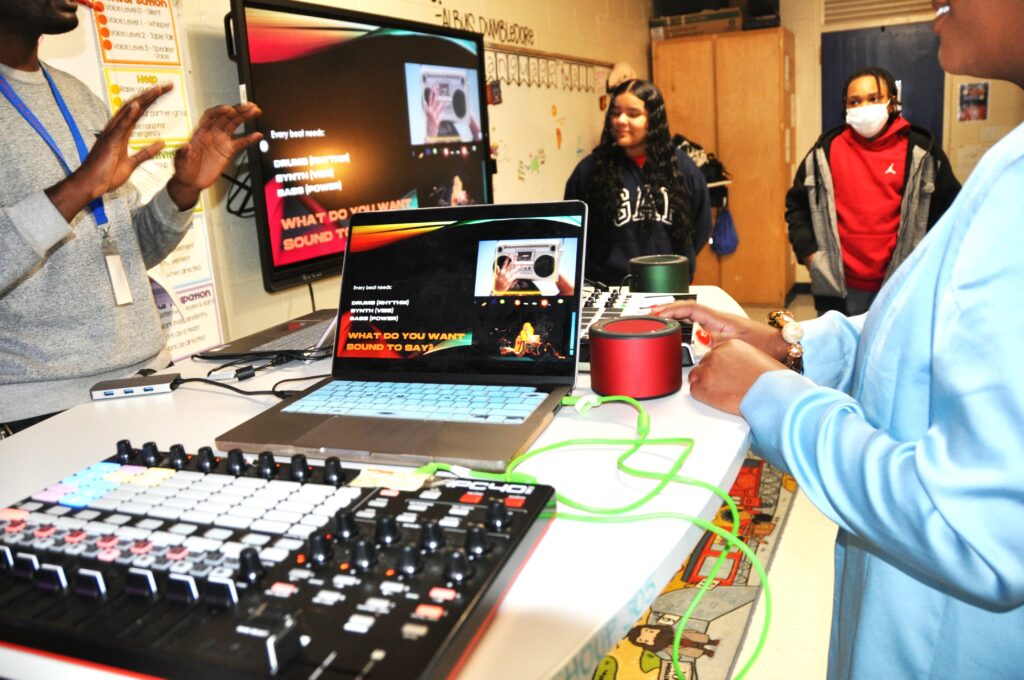
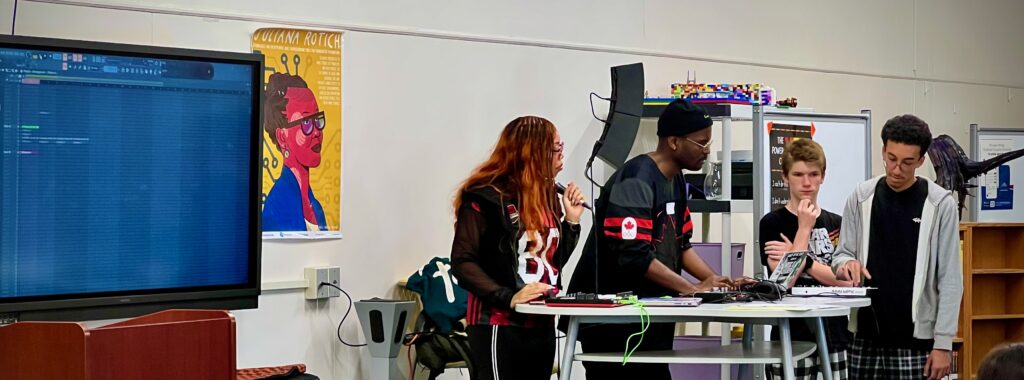
It started with silence. The kind of silence that hums with curiosity and anticipation. Then—boom—the bass dropped. Heads started nodding. Feet tapped. A few eyebrows lifted. Just like that, creativity had a new rhythm at Moncure School and Chatham Early College, where artists Suzi Analogue and REM from Blackspace turned ordinary classrooms into music studios for a week of beatmaking magic.
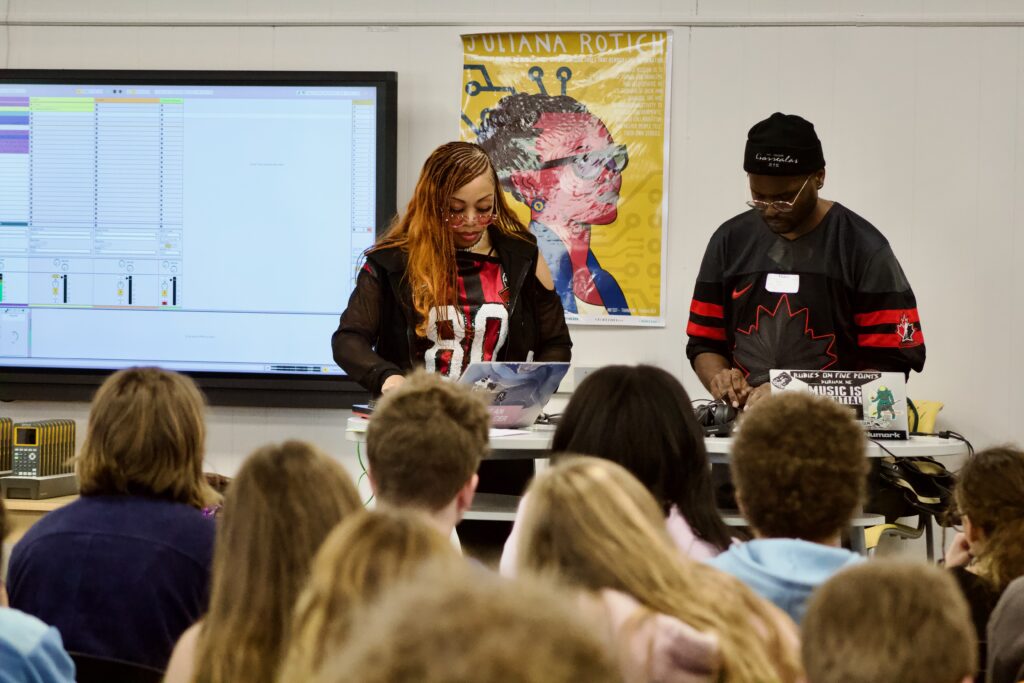
From October 27–31, fifth and seventh graders at Moncure and tenth graders at Chatham Early College learned that making music isn’t just about sound—it’s about identity, expression, and connection. Students dove headfirst into the language of music theory, exploring pitch, octaves, tempo, looping, and beats per minute. They discovered that every great beat needs three things: drums, bass, and synth.
Suzi and REM also walked students through the evolution of music-making—vinyl, cassette, CD, digital—reminding them that sound can live anywhere. As one student put it, “So, it’s like music can time travel?” The artists smiled. “Exactly.”
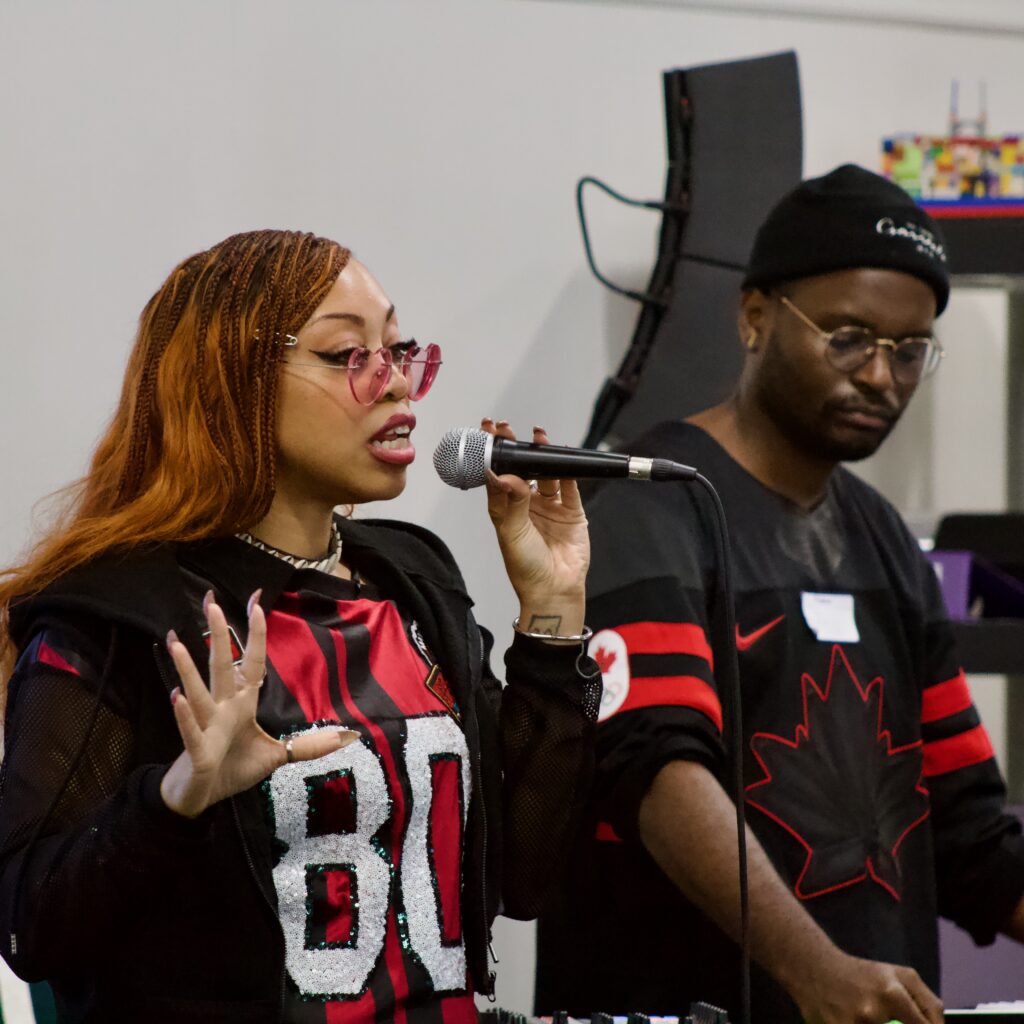
Throughout the week, students explored what it means to be a music producer—part artist, part technician, part storyteller. Suzi shared lessons she learned in college about business and branding. “You have to have your brand,” she told them. “What do you want to tell the world?” A student quickly chimed in, “Like… you mean what’s our vibe?” Suzi laughed, “Exactly! What kind of vibe do you want people to have when they hear your music?”
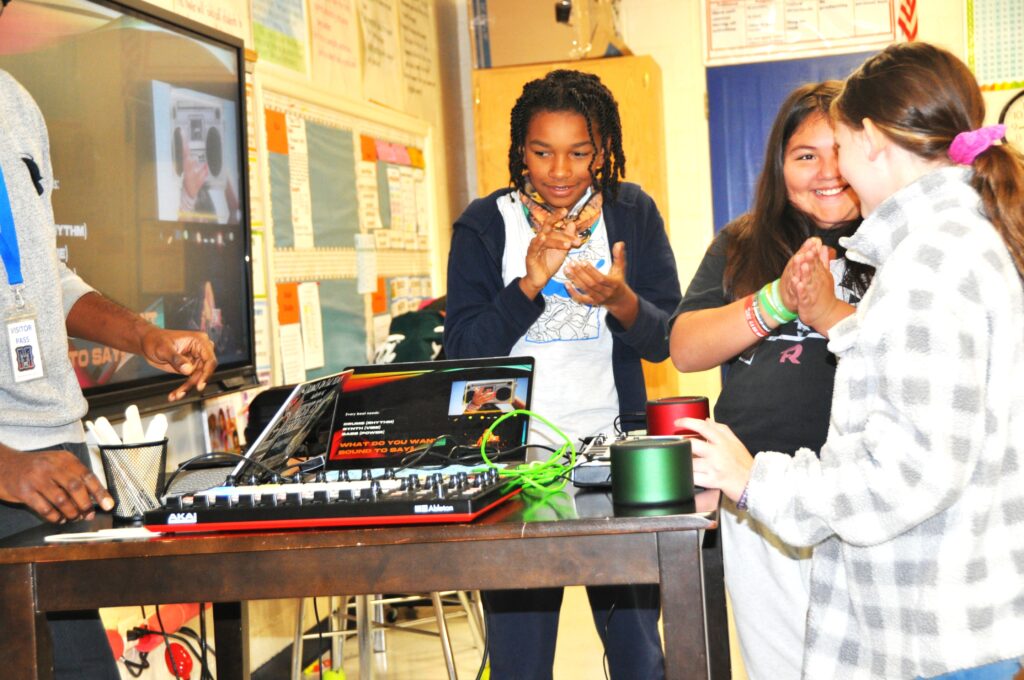
REM, the quieter of the two artists, commanded the room in his own way—steady, patient, encouraging. When students needed help, they sought him out. “You can make the beat say whatever you want it to say,” he told them. “Do you want it fast or slow? Happy or sad?” The students leaned in. They experimented. They listened to each other.
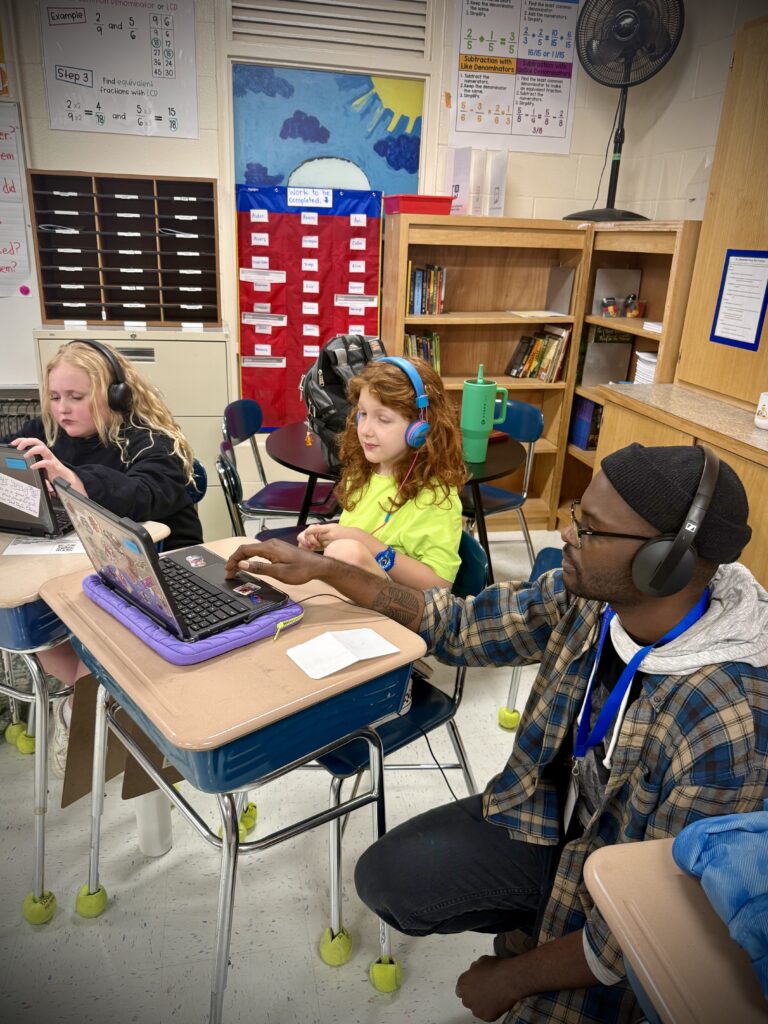
Students used the free digital tool called Bandlab, which allowed them to make their own music on their laptops. They had thousands of instruments to choose from and the creative options seemed endless.
By Friday, the transformation was complete. At the culminating performance, the classroom became a small performance venue. One by one, students shared their beats. At first, no one wanted to admit whose was whose. But as applause filled the room—“That was awesome!”—hands shot up, grins spread wide, and suddenly kids were claiming their creations.
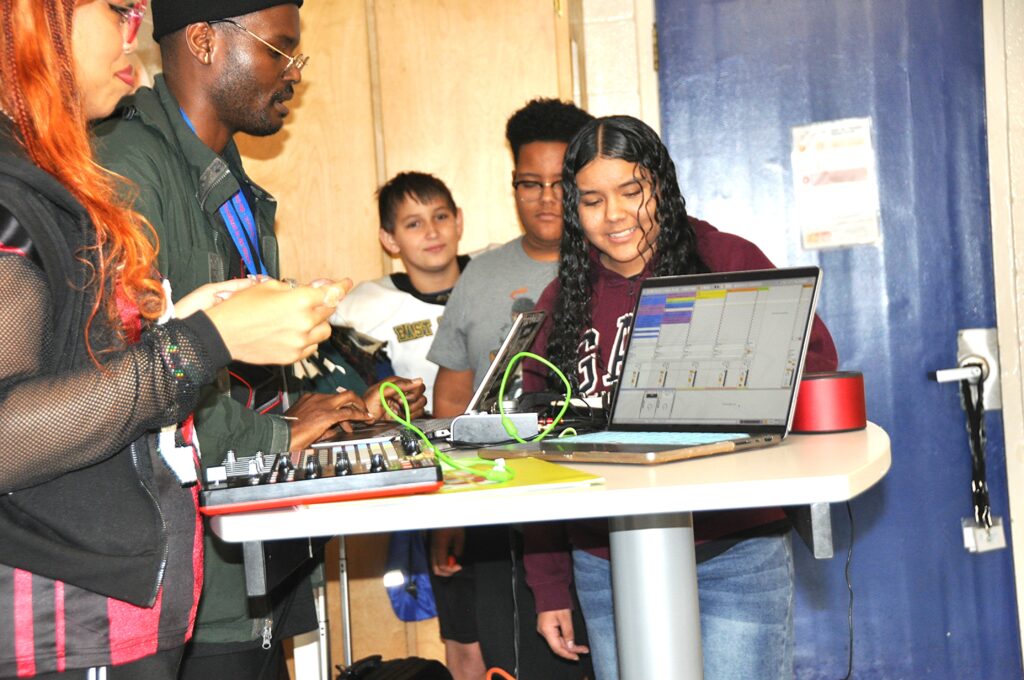
The beats themselves were as diverse as the students who made them—hip-hop grooves, ambient soundscapes, Halloween spooky beats, dance beats, and even cinematic scores. “I’ve seen these quite a few of these performances in the past two years,” said Cheryl Chamblee, Executive Director of the Chatham Arts Council, “and this was the most diverse group of beats I have ever heard.”
One student even wrote her own lyrics and matched beats to her writing. “I had no idea that you could make all these sounds on the computer for FREE; I would’ve been doing this a long time ago.”
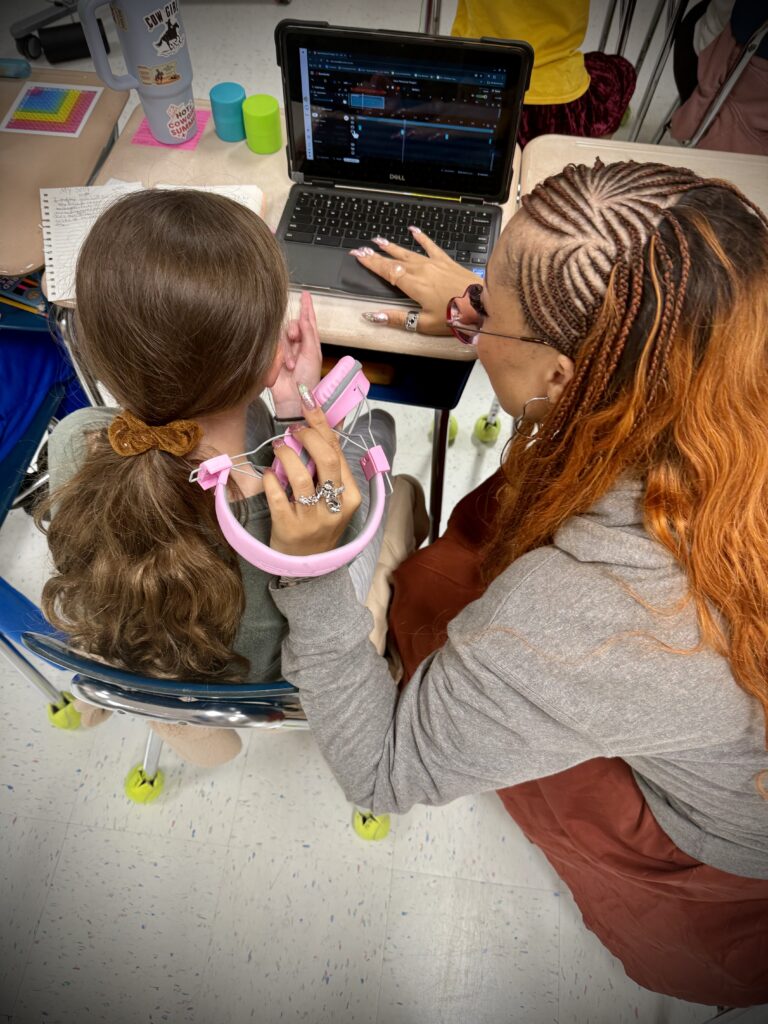
Moments of frustration surfaced when the beat would just not come together quite the way students wanted: “I keep having to re-record this beat, and I am about to lose it.” That particular frustrated student shared one of the most creative beats on the final day.
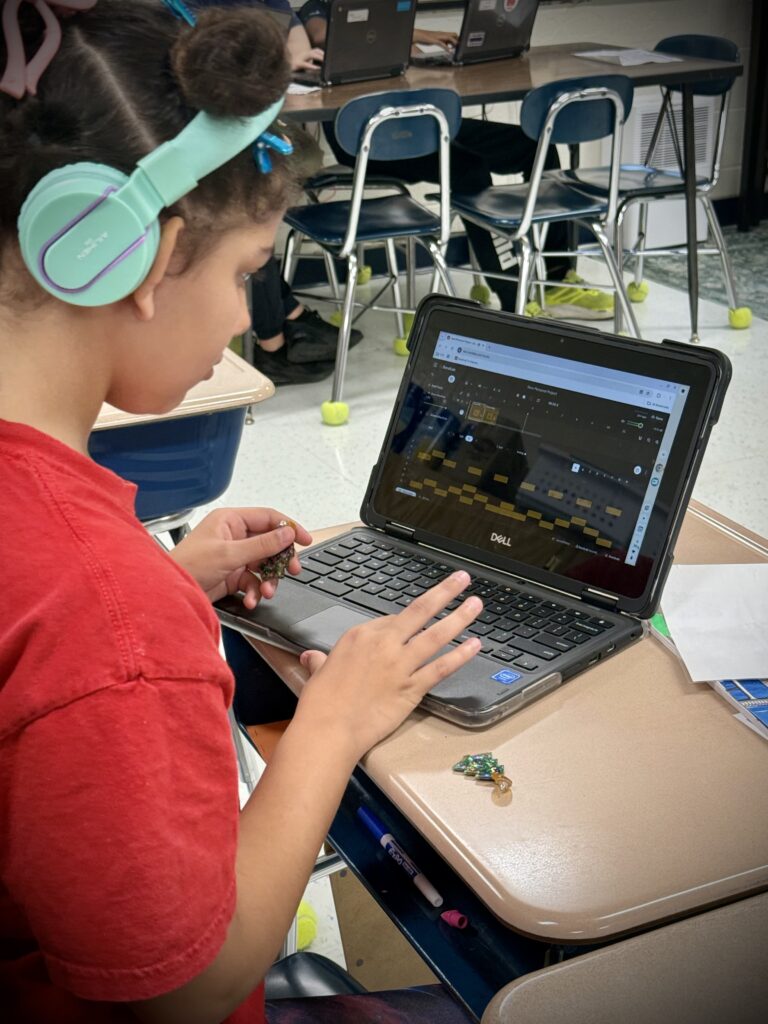
Students definitely embraced hard work, persistence, and determination throughout the week. The classroom teacher for Moncure’s fifth graders confessed, ”I had to make them stop a few times this week. They loved doing BandLab so much.”
Amanda Moran, Director of the Chatham Artists-in-Schools Initiative, agreed. “I’ve worked in schools for almost 30 years and have never seen a classroom so quiet and noisy at the same time,” she said. “If you walk out of the room and the students persist with what they are doing—that’s true engagement. And this was the best example I’ve ever seen.”
By the end of the week, students weren’t just learning about music—they were learning about voice, confidence, and collaboration through technology and arts. They left knowing that they could build something from nothing. A laptop. A few sounds. A spark of imagination.
That’s the beat of learning.
That’s the rhythm of art.
That’s what Artists-in-Schools is all about.
Blackspace’s work at Moncure K-8 School was sponsored by an anonymous community member. Their work at Chatham Early College was sponsored by Enbridge Gas. Both events are part of the Chatham Arts Council’s Artists-in-Schools Initiative.
Arts for Resilient Kids programming is made possible by partnerships with Chatham County Schools, Chatham County, the North Carolina Arts Council, and many individual, foundation, and business donors. If you feel inspired to help us educate kids through the arts, click here to donate.
Leave a Reply